
 info@best-filtration.com
 MBR Membrane
 Reverse Osmosis Membrane
 Residential Ro Membrane
 UF Membrane
 Water Treatment Plant
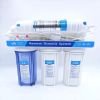 Residential Ro Machine
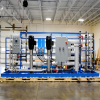 Brackish Ro System
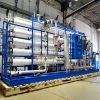 Sea water system/SW RO plant
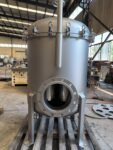 Bag Filter
 Cartridge Filter
 Commercial Water Filtration System
 Membrane Cleaning System(CIP)
 Consumables Accessories


Choosing the right small marine RO desalination unit is an important decision for boat owners, yacht operators, fishing vessels, and marine engineering companies. A properly sized seawater RO system can provide a reliable source of fresh water without depending entirely on shore-based water supplies.
However, choosing a marine watermaker is not simply a matter of selecting the largest freshwater production capacity. The right system depends on your vessel type, daily water consumption, crew size, available electrical power, installation space, seawater conditions, and maintenance requirements.
For small vessels and yachts, marine RO systems are commonly designed in compact configurations that can produce several cubic meters of fresh water per day. Typical capacities such as 5 m³/day, 10 m³/day, and 15 m³/day ,20m³/day can serve different vessel sizes and freshwater requirements.
This guide explains how to select the right small marine RO desalination unit for your boat or yacht.
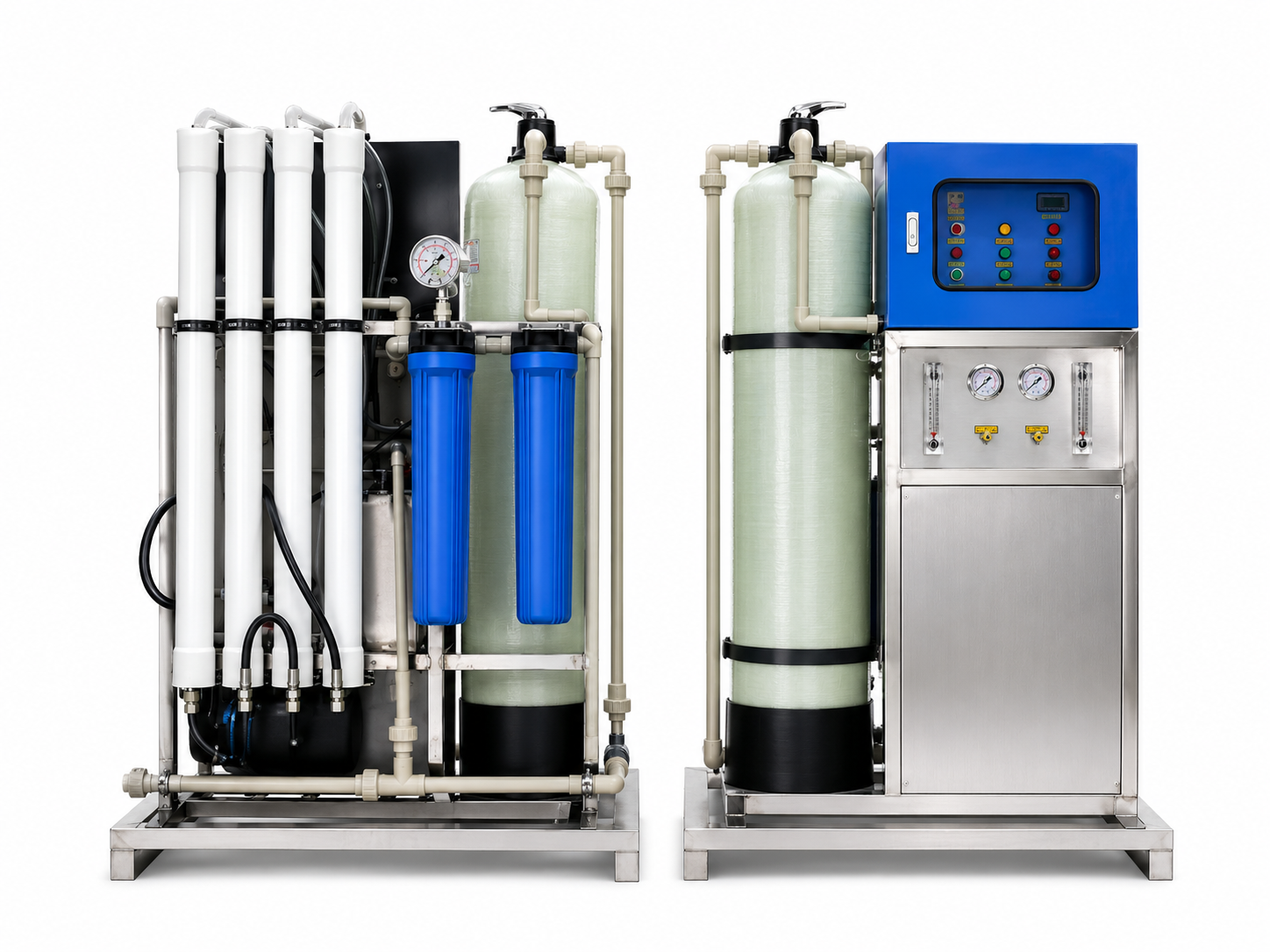
What Is a Small Marine RO Desalination Unit?
A small marine RO desalination unit is a compact seawater reverse osmosis system designed to convert seawater into fresh water onboard a vessel.
The basic process uses a high-pressure pump to force pre-filtered seawater through a semi-permeable RO membrane. Water molecules pass through the membrane, while most dissolved salts and other contaminants are rejected.
The system normally produces two streams:
Permeate: Freshwater produced by the RO membrane
Concentrate: High-salinity brine discharged from the system
A typical marine RO system includes seawater intake, pretreatment filters, a high-pressure pump, RO membrane vessels, flow meters, pressure gauges, valves, piping, and a control system.
1. Start With Your Daily Freshwater Requirement
The first question should not be:
“How big is my boat?”
Instead, start with:
“How much fresh water does my vessel need every day?”
Freshwater demand can include:
Drinking water,Cooking,Showering,Dishwashing,Cleaning,Laundry,Crew accommodation,Guest facilities,Other onboard equipment
A useful calculation is:
Daily Freshwater Demand = Number of People × Average Water Consumption per Person
For example, if a vessel normally carries 10 people and the estimated freshwater requirement is 40 L/person/day:
10 × 40 = 400 L/day
A system producing 5 m³/day has a nominal production capacity of 5,000 L/day, giving substantial capacity above this basic demand.
Actual requirements should be adjusted according to vessel operation. A yacht used for weekend trips may have very different water consumption from a fishing boat operating offshore for several days.
Marine watermaker guides also recommend calculating daily consumption and then working backward to the required hourly production and operating time.
2. Choose the Right Marine RO Capacity
For small and medium-sized vessels, several capacity ranges can be considered.
| Marine RO Capacity | Freshwater Production | Typical Application |
| 1–3 m³/day | 1,000–3,000 L/day | Small boats, limited crew |
| 5 m³/day | 5,000 L/day | Small yachts, fishing boats |
| 10 m³/day | 10,000 L/day | Larger yachts, fishing vessels, small commercial vessels |
| 15 m³/day | 15,000 L/day | Larger fishing boats, workboats, offshore applications |
These values describe nominal daily production. Actual production can vary with seawater temperature, salinity, operating pressure, membrane condition, and pretreatment performance.
5 m³/day Marine RO System
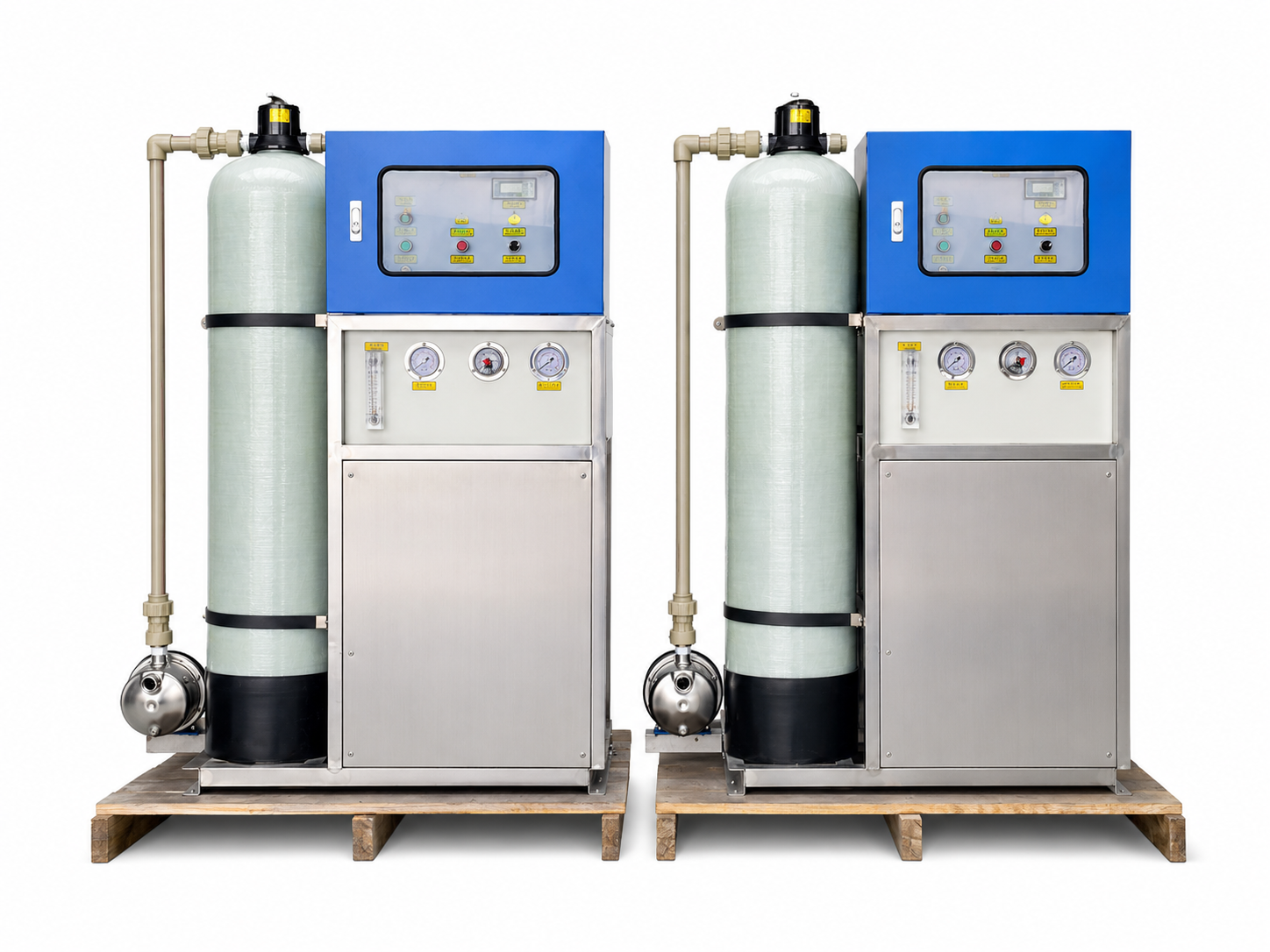
A 5 m³/day marine RO desalination unit is a good starting point for vessels with relatively moderate freshwater requirements.
It can be suitable for:
Small yachts
Leisure boats
Fishing boats
Small workboats
Small offshore vessels
Its compact capacity can also make it easier to integrate into vessels where installation space is limited.
10 m³/day Marine RO System
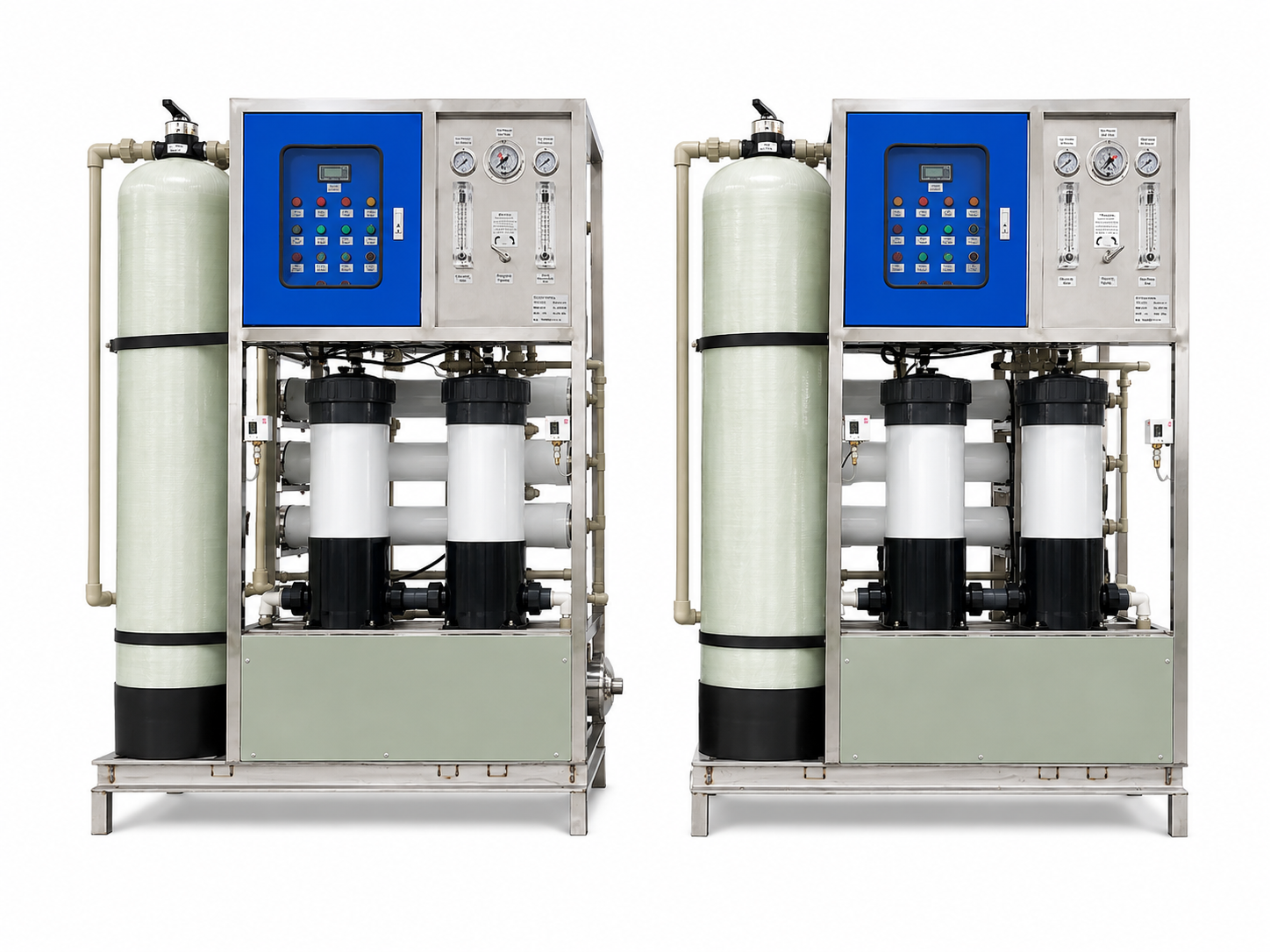
A 10 m³/day marine RO watermaker provides approximately twice the nominal daily output of a 5 m³/day system.
It may be considered when the vessel has:
More crew members
Higher shower and cleaning demand
Longer offshore operating periods
Larger freshwater storage requirements
More frequent freshwater consumption
15 m³/day Marine RO System
A 15 m³/day marine desalination unit is suitable when freshwater demand is significantly higher.
Potential applications include:
Commercial fishing vessels
Larger workboats
Offshore support vessels
Larger yachts
Patrol and service vessels
For commercial vessels, selecting additional production capacity can also provide operational flexibility when freshwater demand changes.
3. Consider the Vessel Type
The same watermaker is not necessarily suitable for every vessel.
Yachts and Leisure Boats
Yachts typically prioritize:
Compact dimensions
Low noise
Reliable freshwater production
Easy operation
Automatic controls
Easy maintenance
For yachts, installation space is often one of the most important considerations.
Fishing Boats
Fishing vessels may require more continuous freshwater production because crews can remain offshore for extended periods.
Important factors include:
Crew size
Trip duration
Freshwater storage capacity
Available electrical power
Ease of maintenance
Resistance to the marine environment
Small Commercial Ships
Commercial vessels generally require reliable operation and predictable freshwater production.
For these applications, the selection should consider both normal consumption and peak demand.
Offshore Vessels
Offshore vessels can have higher freshwater requirements and more demanding operating conditions. Marine-grade components, corrosion resistance, automatic monitoring, and service accessibility become increasingly important.
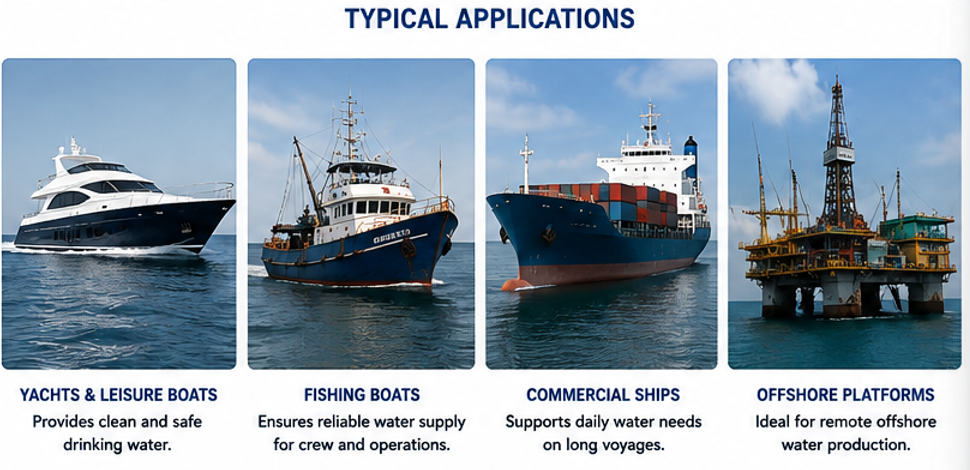
application for kinds ships
4. Check Your Available Power Supply
Electrical compatibility is another critical factor when selecting a marine RO system.
Before requesting a quotation, confirm the vessel’s available power supply.
Common configurations may include:
12 V DC
24 V DC
220–240 V AC
380 V AC / 3 phase or Customized
The required power depends on the system design, freshwater capacity, high-pressure pump, membrane configuration, and optional equipment.
Do not select a watermaker based only on its freshwater production capacity. A higher-capacity system may require a larger electrical supply.
For example, a vessel with limited battery capacity may require a different system configuration from a commercial vessel equipped with a generator.
Marine watermaker selection guides similarly identify power supply as one of the key factors alongside boat size, crew, and daily water demand.
5. Check the Available Installation Space
Space is often a major challenge on small vessels.
Before purchasing a marine RO desalination unit, measure:
Available length
Available width
Available height
Door and hatch dimensions
Access for maintenance
Distance from seawater intake
Distance to freshwater tank
Drain and brine discharge location
Our Machine Dimension and Weight:
| Model | 5m3/D | 10m3/D | 15m3/D | 20m3/D |
| Dimen.L,W,H/cm | 120*60*150 | 140×65×185 | 140×75×195 | 140×75×195 |
| Weight | 300kgs | 850Kg | 1.1T | 1.4T |
| Person Equivalent | 1-30PE | 30-50PE | 50PE | 100PE |
| Picture |
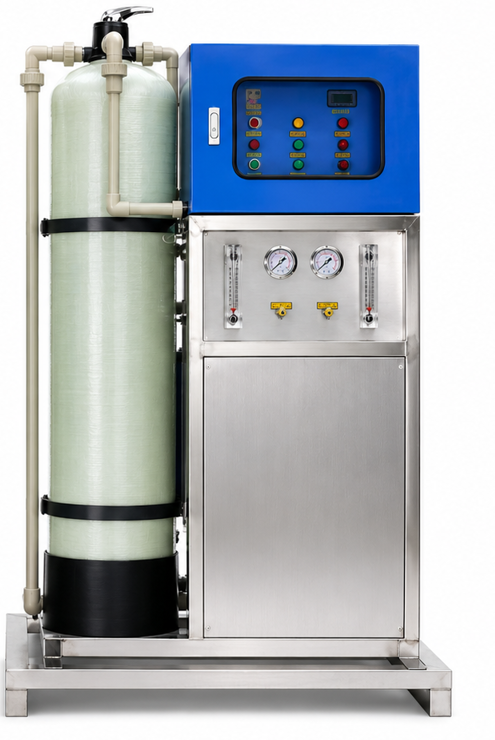 m3 per day marine sw ro machine |
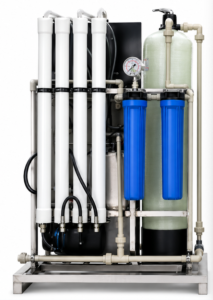 5m3 per day sea water machine |
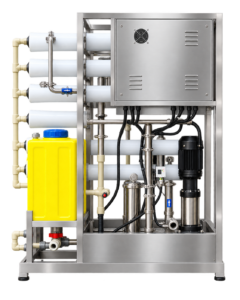 20m3 per day sw ro machine |
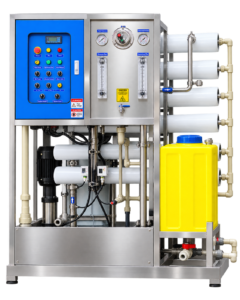 20m3 per day sea water machine |
A compact skid-mounted system can simplify installation, but sufficient service clearance should still be provided.
For vessels with very limited space, a modular configuration may be useful because components can be installed separately instead of occupying one large equipment footprint.
Installation Space Is Not Only About Equipment Dimensions
Do not measure only the footprint of the RO skid.
You also need space to:
Replace cartridge filters
Inspect pumps
Access valves
Check pressure gauges
Service the RO membrane
Connect electrical cables
Route seawater and freshwater pipes
A professional marine RO system supplier should consider both the equipment footprint and the maintenance area when preparing a quotation.
6. Understand the Marine RO Treatment Process
A typical small marine RO desalination system follows this basic process:
Seawater Intake → Feed Pump → Pretreatment → Cartridge Filtration → High-Pressure Pump → RO Membrane → Freshwater / Brine Separation
The pretreatment stage protects the RO membrane from suspended solids and other contaminants.
The high-pressure pump then provides the pressure required for reverse osmosis.
Inside the RO membrane vessel, the feed water is separated into:
Permeate → Freshwater
and
Concentrate → Brine
The freshwater can then be sent to a freshwater tank or onboard water distribution system.
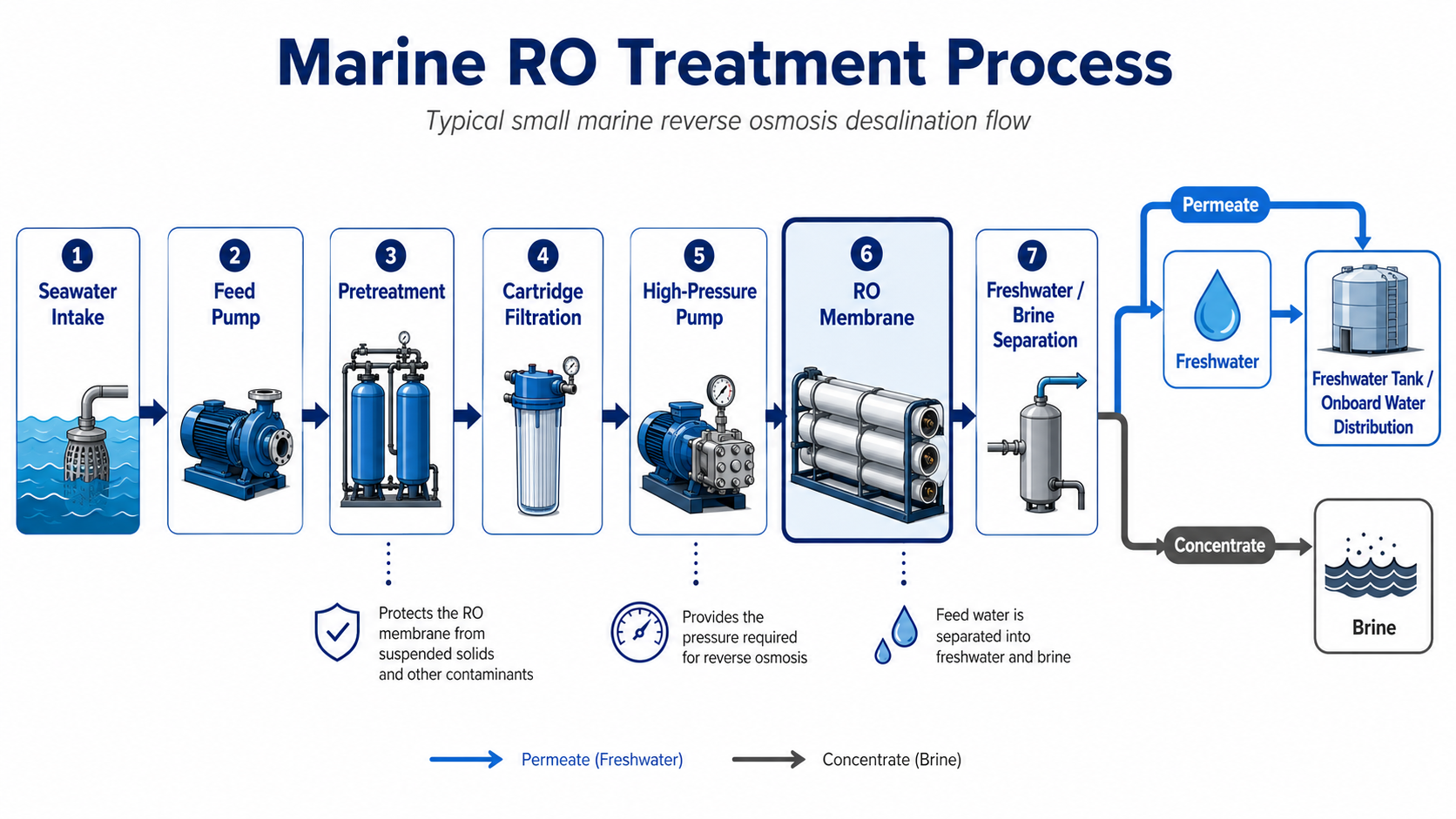
Marine RO desalination process flow diagram from seawater intake to freshwater
7. Pay Attention to Pretreatment
RO membranes are sensitive to suspended solids, fouling, scaling, and certain chemical contaminants.
Therefore, pretreatment is an important part of a marine watermaker.
Depending on the system design and seawater conditions, pretreatment may include:
Seawater intake strainer
Sediment filtration
Cartridge filtration
Activated carbon or other treatment where appropriate
Antiscalant dosing where required
The exact pretreatment configuration should be determined according to the seawater quality and RO membrane requirements.
For vessels operating in harbors, coastal areas, or waters with high suspended solids, pretreatment becomes especially important.
8. Select the Right RO Membrane Configuration
The RO membrane is the core desalination component.
When selecting a marine RO system, ask the supplier about:
RO membrane model
Membrane quantity
Membrane size
Salt rejection
Design flux
Operating pressure
Expected freshwater production
Feedwater salinity
Membrane replacement availability
The membrane should be selected according to the intended seawater conditions rather than simply choosing the membrane with the highest advertised output.
A marine RO system designed for seawater should also be operated within the membrane manufacturer’s recommended pressure, flow, temperature, and chemical limits.
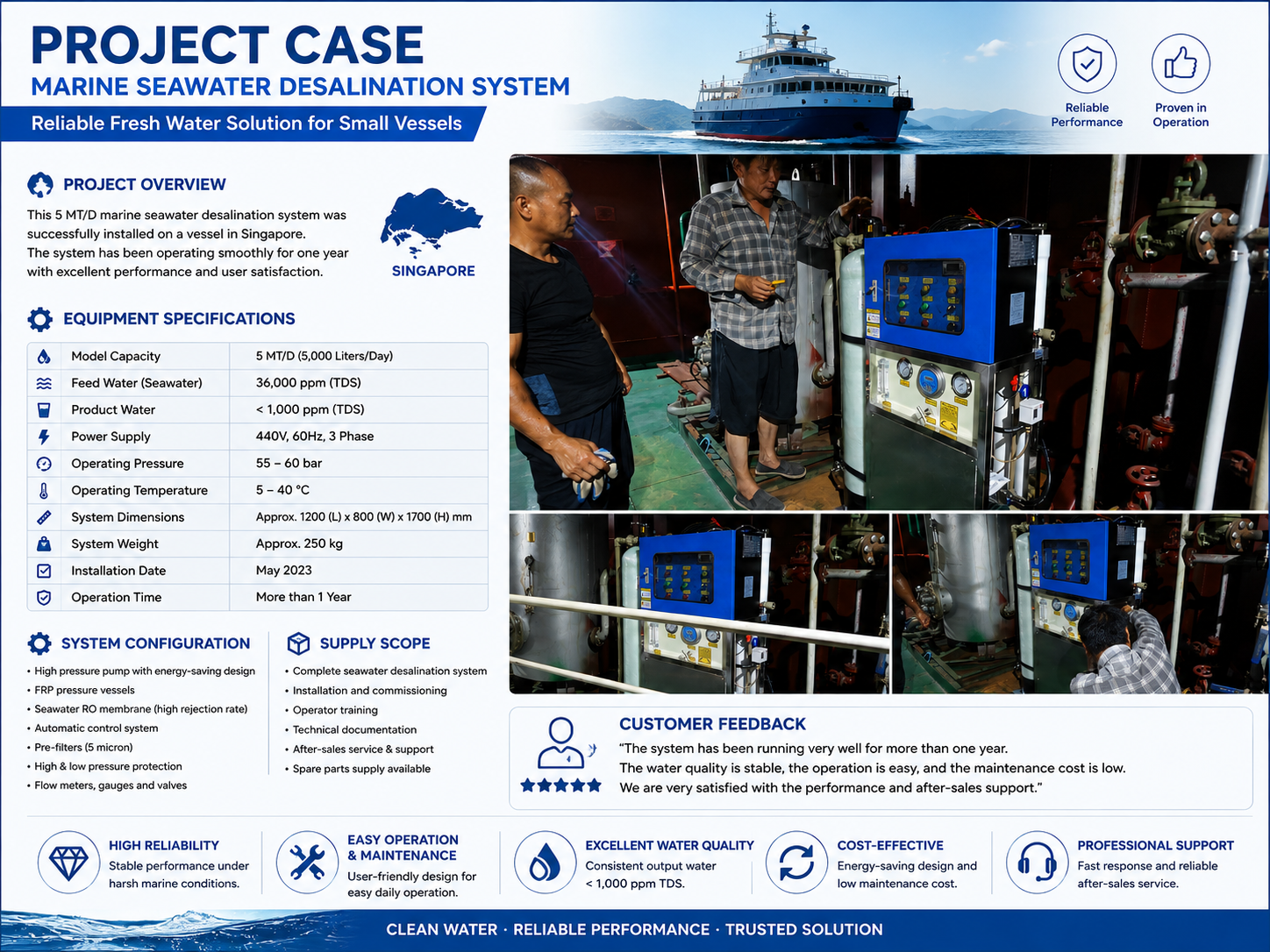
Marine water system case in Singapore
9. Consider Water Temperature and Salinity
Marine RO production is not completely independent of seawater conditions.
Two vessels using the same RO system can experience different production rates if they operate in different environments.
Important variables include:
Feedwater temperature
Salinity / TDS
Turbidity
Suspended solids
Organic contamination
Membrane condition
Operating pressure
For example, cold seawater can reduce membrane permeate production compared with warmer seawater.
Higher salinity can also increase the pressure required for desalination.
Therefore, when requesting a quotation, provide the supplier with your expected seawater TDS or salinity whenever possible.
10. Automatic Control and Monitoring
For marine applications, an automatic control system can make operation easier and safer.
Useful monitoring functions may include:
Feed pressure
RO operating pressure
Permeate flow
Concentrate flow
Conductivity / TDS
High-pressure protection
Low-pressure protection
Pump protection
Automatic shutdown
A PLC-based control panel can also simplify operation for crew members who may not have specialist RO experience.
For commercial and offshore vessels, online monitoring can be particularly valuable because operators can identify abnormal pressure or water-quality conditions before they develop into larger problems.
But automatic machine is difficult to make maintenance so we choose manual kind design which is better to use on ocean.
11. Think About Maintenance Before You Buy
A marine watermaker is exposed to seawater, vibration, humidity, and changing operating conditions.
Therefore, maintenance should be considered during the selection stage.
Ask your supplier:
How often should cartridge filters be replaced?
How often should the RO membrane be cleaned?
What chemicals are required for cleaning?
Are replacement membranes readily available?
Are standard pumps and valves used?
Can the system be serviced by a local technician?
Is remote technical support available?
A system with easily accessible filters, pumps, valves, and instruments can reduce downtime.
For a vessel operating far from port, spare parts availability can be just as important as the initial equipment price.
12. Compare Suppliers Before Requesting a Quotation
When comparing marine RO desalination suppliers, do not compare price alone.
Ask each supplier to provide the following information:
| Item | Information to Request |
| Freshwater Capacity | m³/day or L/hour |
| Feedwater | Seawater TDS / salinity |
| Recovery | Design recovery rate |
| Operating Pressure | bar / MPa |
| RO Membrane | Brand and model |
| High-Pressure Pump | Brand and model |
| Power Supply | Voltage / phase / frequency |
| Power Consumption | kW |
| Dimensions | L × W × H |
| Weight | kg |
| Control System | Manual / Automatic / PLC |
| Material | SS304 / SS316 / other |
| Water Quality | Permeate TDS / conductivity |
| Warranty | Warranty period |
| Spare Parts | Availability |
| Delivery | Production and shipping time |
This information makes it much easier to compare different systems on a like-for-like basis.
13. What Information Should You Send to a Marine RO Supplier?
If you want an accurate quotation, provide as much technical information as possible.
A good RFQ should include:
- Vessel type:
Yacht, fishing boat, workboat, commercial ship, offshore vessel, etc. - Freshwater requirement:
For example, 5 m³/day, 10 m³/day, or 15 m³/day,20m3/day. - Number of people onboard:
Crew and passengers. - Seawater conditions:
TDS or salinity, temperature, and location if available. - Power supply:
12 V DC, 24 V DC, 220 V AC, 380 V AC, etc. - Installation space:
Available L × W × H. - Freshwater destination:
Freshwater tank, drinking-water system, general service water, etc. - Automation requirements:
Manual control, automatic control, PLC, conductivity monitoring, etc.
Providing this information allows the manufacturer to recommend a more suitable configuration instead of simply sending a standard price list.
Small Marine RO Desalination Unit Selection Checklist
Before ordering, check the following:
Daily freshwater demand has been calculated
Vessel type and crew size are confirmed
Required RO capacity has been selected
Electrical power supply is confirmed
Installation dimensions are available
Seawater salinity/TDS is known
Seawater temperature is considered
Pretreatment requirements are confirmed
RO membrane model is specified
High-pressure pump is specified
Freshwater quality requirement is confirmed
Automatic control requirements are confirmed
Maintenance access is available
Spare parts availability is confirmed
Warranty and after-sales support are clear
5 m³/day, 10 m³/day or 15 m³/day: Which Marine RO System Is Right for You?
There is no universal answer.
A 5 m³/day marine RO desalination unit may be appropriate for a small yacht, fishing boat, or vessel with moderate freshwater demand.
A 10 m³/day marine RO system may be more suitable for vessels with larger crews, higher consumption, or longer offshore operating periods.
A 15 m³/day marine RO watermaker can provide additional capacity for larger fishing boats, workboats, offshore vessels, and other applications with higher freshwater demand.
The best selection is the system that provides sufficient freshwater production while matching your vessel’s available power, installation space, seawater conditions, operating schedule, and maintenance requirements.
Conclusion
Selecting a small marine RO desalination unit should begin with your actual freshwater requirements rather than simply choosing the largest available model.
The most important factors are:
Freshwater demand + vessel type + power supply + installation space + seawater quality + RO membrane configuration + maintenance requirements.
For small marine applications, compact 5 m³/day, 10 m³/day, and 15 m³/day seawater RO systems can provide flexible options for yachts, fishing boats, workboats, and other vessels.
If you are unsure which capacity is suitable for your vessel, provide your vessel type, number of people onboard, required freshwater production, available power supply, seawater TDS, and available installation space. A marine RO manufacturer can then recommend the appropriate configuration.
Request a Marine RO Desalination System Quotation
Looking for a compact marine RO desalination unit for your boat or yacht?
Contact Besta with the following information:
Vessel Type + Freshwater Capacity + Power Supply + Seawater TDS + Installation Space
Our technical team can help you evaluate the appropriate marine RO configuration for your application.
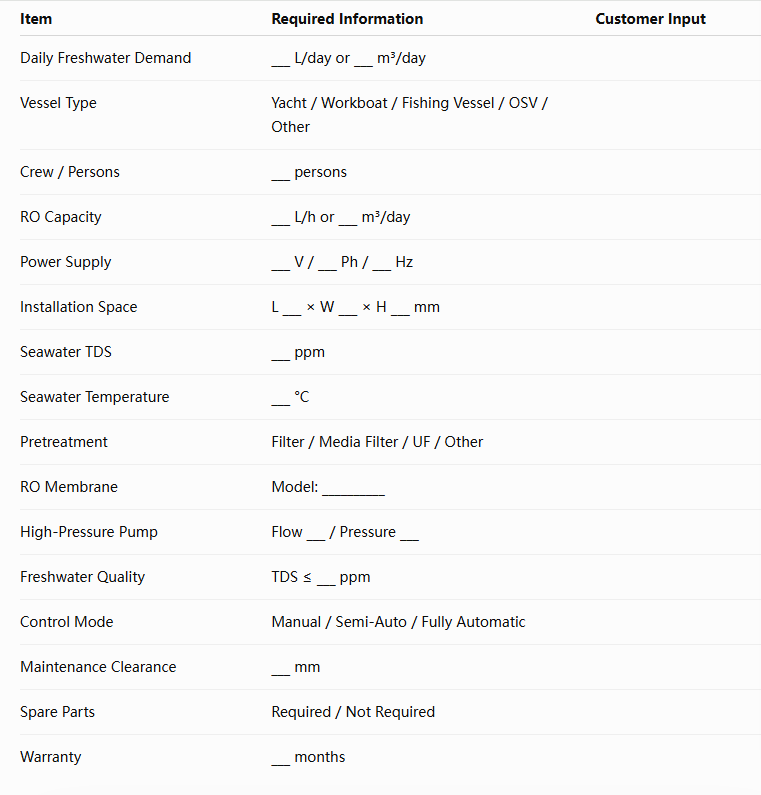
checklist for RO system
