
 info@best-filtration.com
 Membrana MBR
 Membrana de ósmosis inversa
 Membrana RO residencial
 Membrana UF
 Planta de tratamiento de agua
 Máquina residencial RO
 Sistema RO salobre
 Sistema de agua de mar/planta SW ro
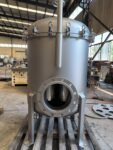 Filtro de bolsa
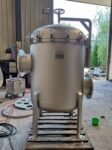 Filtro de cartucho
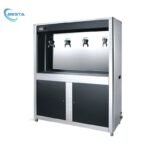 Sistema de filtración de agua comercial
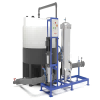 Sistema de limpieza de membrana(Titubear)
 Accesorios de consumo


Elegir el pequeño marino adecuado Unidad de desalinización por ósmosis inversa Es una decisión importante para los propietarios de embarcaciones., operadores de yates, barcos pesqueros, y empresas de ingeniería marina. Un sistema de ósmosis inversa de agua de mar del tamaño adecuado puede proporcionar una fuente confiable de agua dulce sin depender completamente del suministro de agua desde la costa..
Sin embargo, Elegir un potabilizador marino no es simplemente una cuestión de seleccionar la mayor capacidad de producción de agua dulce. El sistema correcto depende de su tipo de embarcación, consumo diario de agua, tamaño de la tripulación, energía eléctrica disponible, espacio de instalación, condiciones del agua de mar, y requisitos de mantenimiento.
Para embarcaciones pequeñas y yates, Los sistemas marinos de RO se diseñan comúnmente en configuraciones compactas que pueden producir varios metros cúbicos de agua dulce por día.. Capacidades típicas como 5 m³/día, 10 m³/día, y 15 m³/día ,20m³/día puede satisfacer diferentes tamaños de embarcaciones y necesidades de agua dulce.
Esta guía explica cómo seleccionar la pequeña unidad de desalinización marina por ósmosis inversa adecuada para su barco o yate..
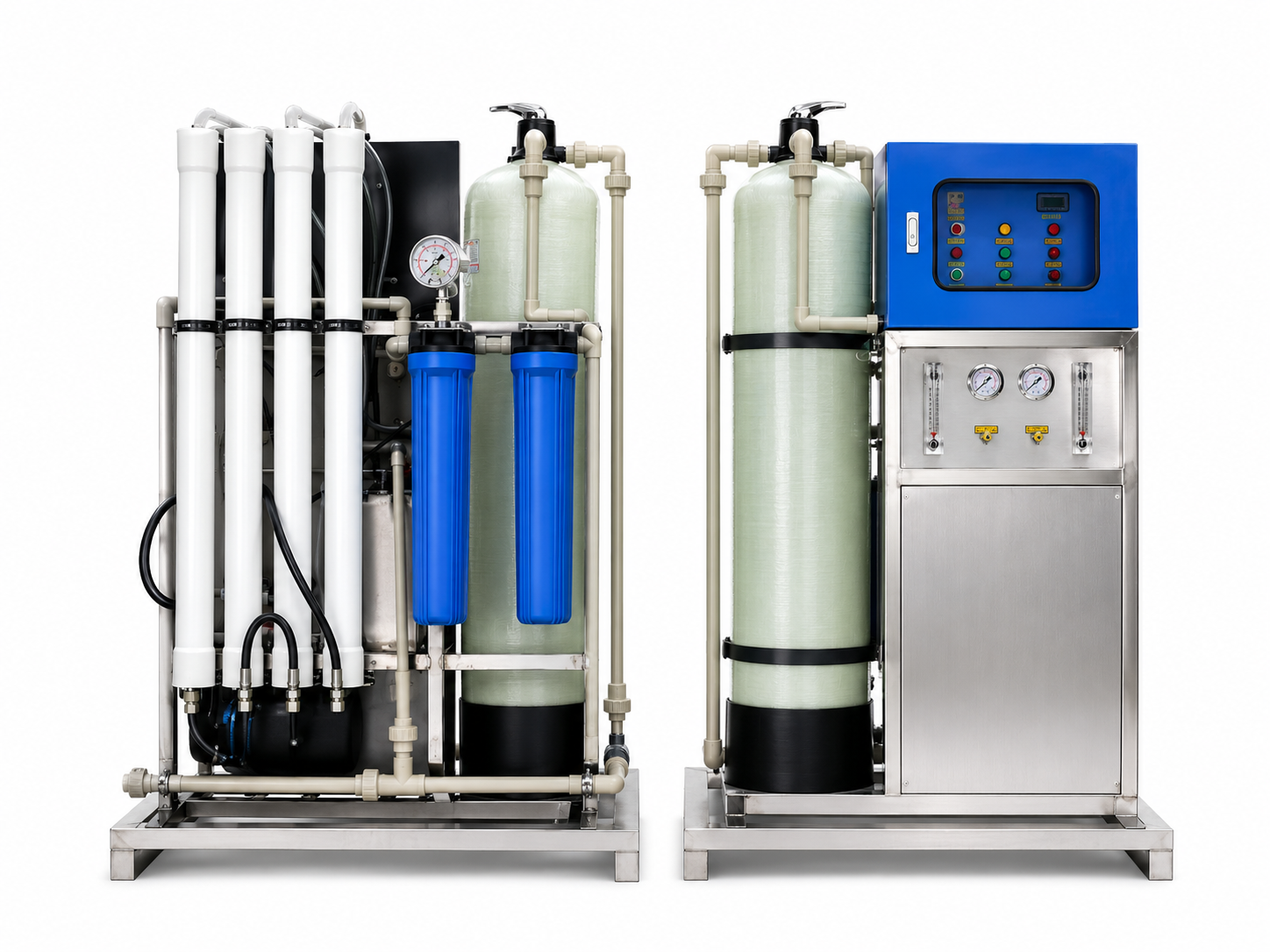
¿Qué es un pequeño? Desalinización marina por ósmosis inversa Unidad?
Una pequeña unidad marina de desalinización por RO es un sistema compacto de ósmosis inversa de agua de mar diseñado para convertir el agua de mar en agua dulce a bordo de un barco..
El proceso básico utiliza una bomba de alta presión para forzar el agua de mar prefiltrada a través de una membrana RO semipermeable.. Las moléculas de agua atraviesan la membrana., mientras que la mayoría de las sales disueltas y otros contaminantes son rechazados.
El sistema normalmente produce dos corrientes.:
Impregnar: Agua dulce producida por la membrana RO
Concentrarse: Salmuera de alta salinidad descargada del sistema.
Un sistema de ósmosis inversa marino típico incluye la entrada de agua de mar., filtros de pretratamiento, una bomba de alta presion, Vasos de membrana RO, medidores de flujo, medidores de presión, valvulas, tubería, y un sistema de control.
1. Comience con su requerimiento diario de agua dulce
La primera pregunta no debería ser:
“¿Qué tan grande es mi barco??"
En cambio, empezar con:
“¿Cuánta agua dulce necesita mi embarcación cada día??"
La demanda de agua dulce puede incluir:
Agua potable,Cocinando,ducharse,Para lavavajillas,Limpieza,Lavadero,Alojamiento de la tripulación,Instalaciones para huéspedes,Otros equipos a bordo
Un cálculo útil es:
Demanda diaria de agua dulce = Número de personas × Consumo promedio de agua por persona
Por ejemplo, si un buque normalmente transporta 10 personas y el requerimiento estimado de agua dulce es 40 L/persona/día:
10 × 40 = 400 litros/día
Un sistema que produce 5 m³/día tiene una capacidad de producción nominal de 5,000 litros/día, dando una capacidad sustancial por encima de esta demanda básica.
Los requisitos reales deben ajustarse según la operación del buque.. Un yate utilizado para viajes de fin de semana puede tener un consumo de agua muy diferente al de un barco pesquero que opera en alta mar durante varios días..
Las guías de potabilizadoras marinas también recomiendan calcular el consumo diario y luego retroceder hasta la producción horaria requerida y el tiempo de funcionamiento..
2. Elija la capacidad de RO marina adecuada
Para embarcaciones pequeñas y medianas, Se pueden considerar varios rangos de capacidad..
| Capacidad de RO marino | Producción de agua dulce | Aplicación típica |
| 1–3 m³/día | 1,000–3.000 litros/día | Embarcaciones pequeñas, tripulación limitada |
| 5 m³/día | 5,000 litros/día | Pequeños yates, barcos de pesca |
| 10 m³/día | 10,000 litros/día | Yates más grandes, barcos pesqueros, pequeños buques comerciales |
| 15 m³/día | 15,000 litros/día | Barcos de pesca más grandes, barcos de trabajo, aplicaciones costa afuera |
Estos valores describen la producción diaria nominal.. La producción real puede variar con la temperatura del agua de mar., salinidad, presión de funcionamiento, condición de la membrana, y rendimiento del pretratamiento.
5 m³/día Sistema de ósmosis inversa marino
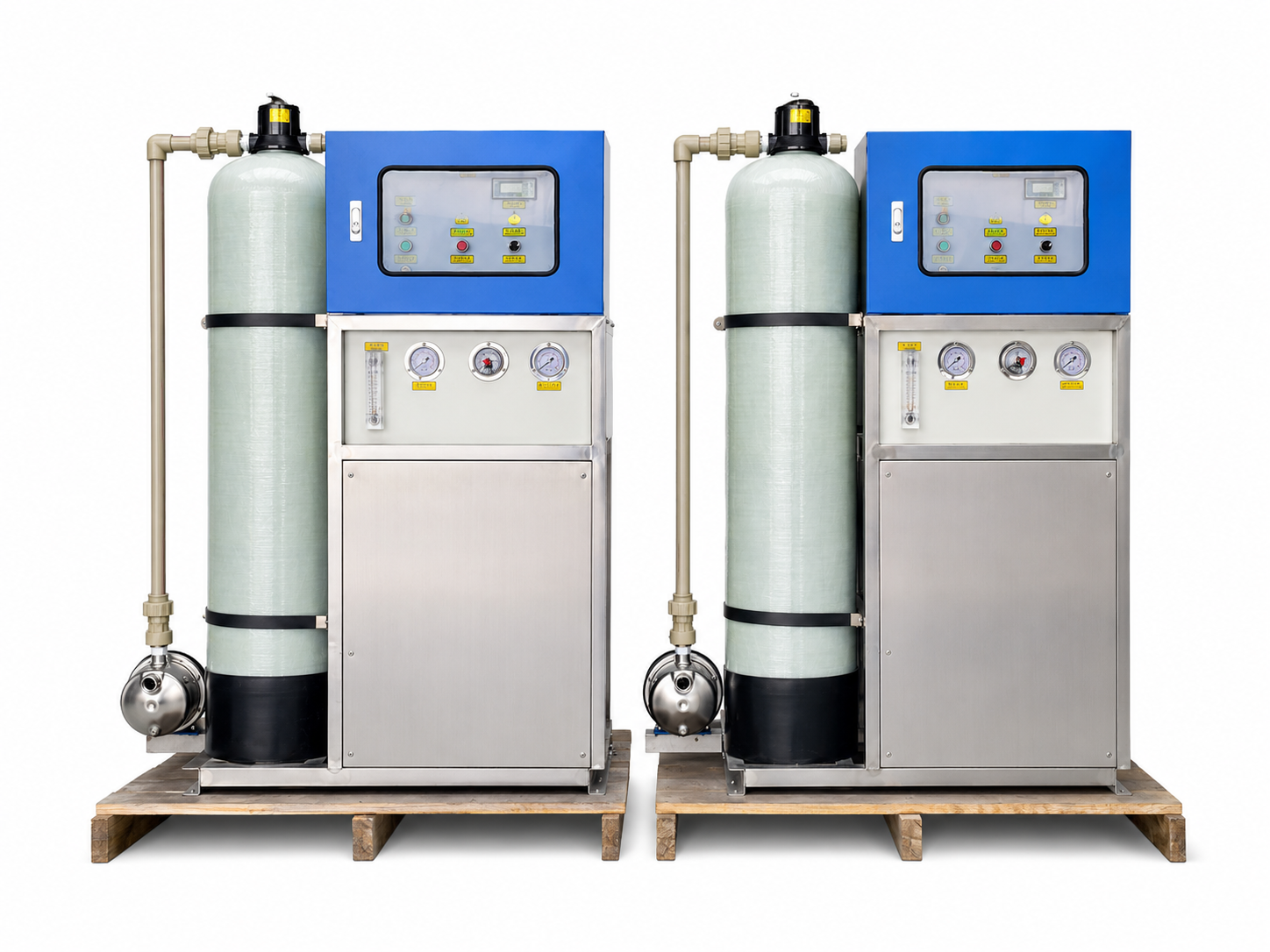
A 5 m³/día unidad desaladora marina por ósmosis inversa Es un buen punto de partida para embarcaciones con necesidades de agua dulce relativamente moderadas..
Puede ser adecuado para:
Pequeños yates
Barcos de recreo
barcos de pesca
Pequeños barcos de trabajo
Pequeños buques de alta mar
Su capacidad compacta también puede facilitar la integración en recipientes donde el espacio de instalación es limitado..
10 m³/día Sistema de ósmosis inversa marino
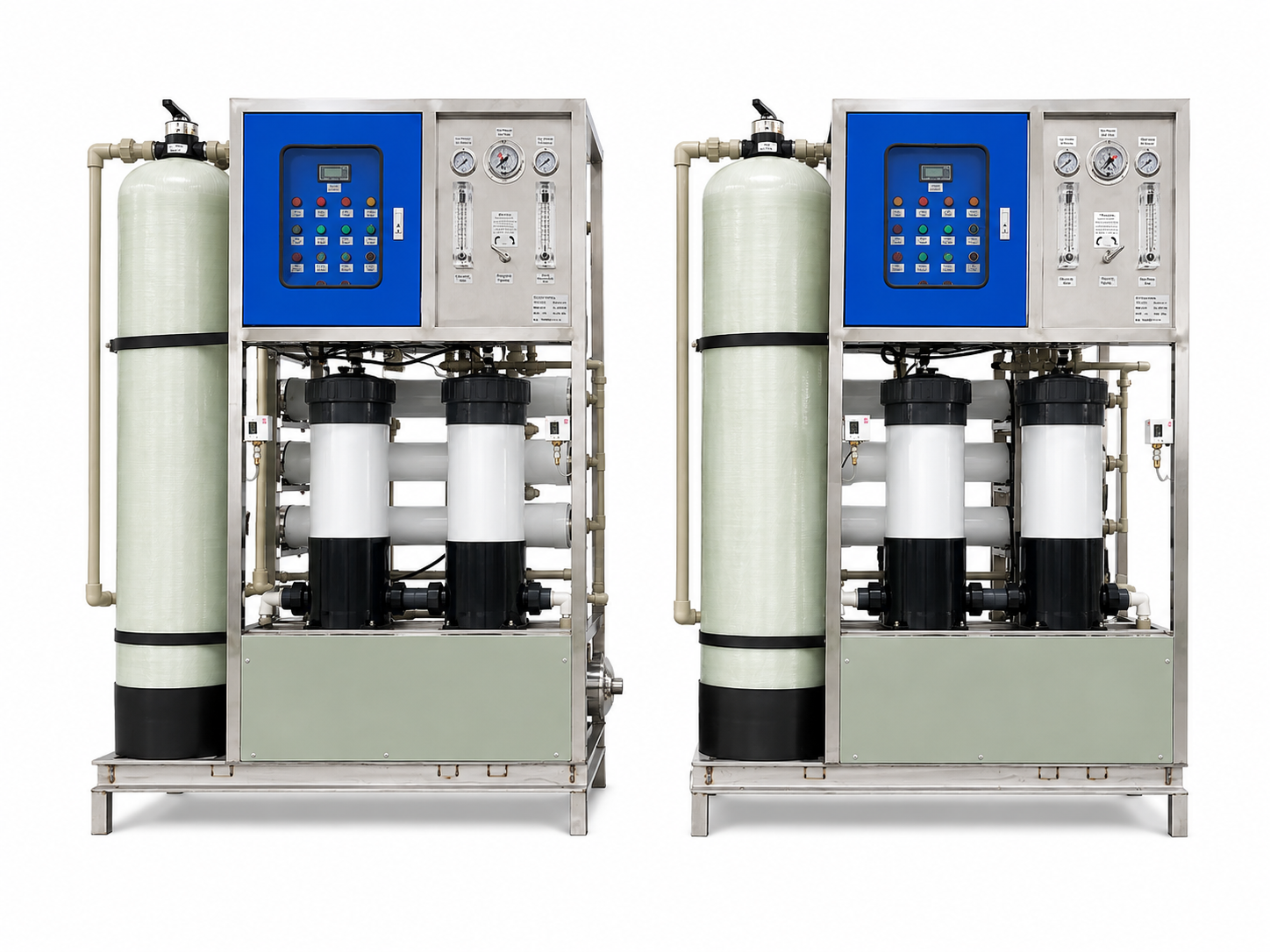
A 10 potabilizadora marina RO de m³/día Proporciona aproximadamente el doble de la producción diaria nominal de una 5 sistema m³/día.
Podrá considerarse cuando el buque tenga:
Más miembros de la tripulación
Mayor demanda de ducha y limpieza
Períodos operativos offshore más largos
Mayores necesidades de almacenamiento de agua dulce
Consumo más frecuente de agua dulce
15 m³/día Sistema RO marino
A 15 m³/día unidad de desalinización marina Es adecuado cuando la demanda de agua dulce es significativamente mayor..
Las aplicaciones potenciales incluyen:
Buques de pesca comercial
Barcos de trabajo más grandes
Buques de apoyo en alta mar
Yates más grandes
Buques de patrulla y servicio
Para buques comerciales, La selección de capacidad de producción adicional también puede proporcionar flexibilidad operativa cuando cambia la demanda de agua dulce..
3. Considere el tipo de embarcación
La misma potabilizadora no es necesariamente adecuada para todos los buques.
Yates y embarcaciones de recreo
Los yates suelen priorizar:
Dimensiones compactas
Bajo nivel de ruido
Producción confiable de agua dulce
Fácil operación
Controles automáticos
Fácil mantenimiento
Para yates, El espacio de instalación es a menudo una de las consideraciones más importantes..
Barcos de pesca
Los buques pesqueros pueden requerir una producción de agua dulce más continua porque las tripulaciones pueden permanecer en alta mar durante períodos prolongados..
Los factores importantes incluyen:
Tamaño de la tripulación
Duración del viaje
Capacidad de almacenamiento de agua dulce
Energía eléctrica disponible
Facilidad de mantenimiento
Resistencia al medio marino
Pequeños barcos comerciales
Los buques comerciales generalmente requieren una operación confiable y una producción de agua dulce predecible..
Para estas aplicaciones, La selección debe considerar tanto el consumo normal como la demanda máxima..
Buques costa afuera
Los buques marinos pueden tener mayores necesidades de agua dulce y condiciones operativas más exigentes.. Componentes de calidad marina, resistencia a la corrosión, monitoreo automático, y la accesibilidad a los servicios son cada vez más importantes.
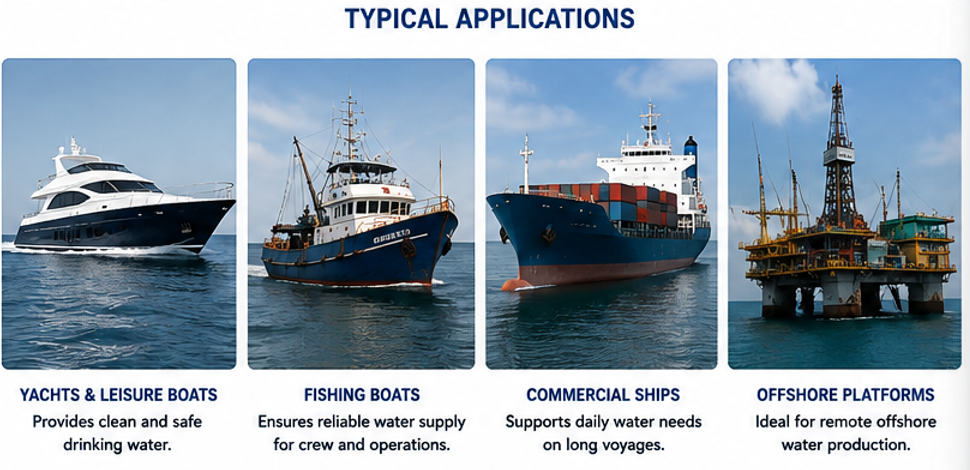
solicitud para tipos de barcos
4. Verifique su fuente de alimentación disponible
La compatibilidad eléctrica es otro factor crítico al seleccionar un sistema de RO marino.
Antes de solicitar una cotización, Confirmar el suministro de energía disponible del barco..
Las configuraciones comunes pueden incluir:
12 En DC
24 En DC
220–240 V CA
380 V CA / 3 fase o personalizado
La potencia requerida depende del diseño del sistema., capacidad de agua dulce, bomba de alta presión, configuración de membrana, y equipamiento opcional.
No seleccione un potabilizador basándose únicamente en su capacidad de producción de agua dulce. Un sistema de mayor capacidad puede requerir un mayor suministro eléctrico.
Por ejemplo, Una embarcación con capacidad de batería limitada puede requerir una configuración de sistema diferente a la de una embarcación comercial equipada con un generador..
Las guías de selección de desalinizadores marinos también identifican el suministro de energía como uno de los factores clave junto con el tamaño de la embarcación., multitud, y demanda diaria de agua.
5. Verifique el espacio de instalación disponible
El espacio suele ser un gran desafío en las embarcaciones pequeñas..
Antes de comprar una unidad de desalinización marina por ósmosis inversa, medida:
Longitud disponible
Ancho disponible
Altura disponible
Dimensiones de puertas y trampillas.
Acceso para mantenimiento
Distancia desde la toma de agua de mar
Distancia al tanque de agua dulce
Ubicación de drenaje y descarga de salmuera
Nuestra dimensión y peso de la máquina:
| Modelo | 5m3/D | 10m3/D | 15m3/D | 20m3/D |
| Dimensión.L,W,Alto/cm | 120*60*150 | 140×65×185 | 140×75×195 | 140×75×195 |
| Peso | 300kg | 850Kg | 1.1T | 1.4T |
| Persona equivalente | 1-30educación física | 30-50educación física | 50educación física | 100educación física |
| Imagen |
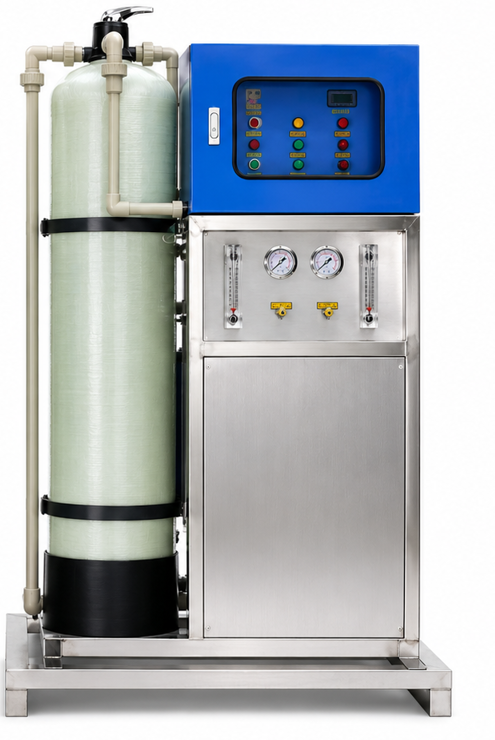 m3 por día máquina marina sw ro |
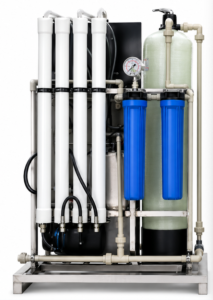 5m3 por día máquina de agua de mar |
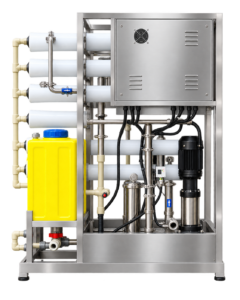 20m3 por día máquina sw ro |
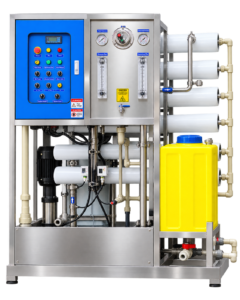 20m3 por día máquina de agua de mar |
Un sistema compacto montado sobre patines puede simplificar la instalación, pero aún así se debe proporcionar suficiente autorización de servicio.
Para embarcaciones con espacio muy limitado, una configuración modular puede ser útil porque los componentes se pueden instalar por separado en lugar de ocupar un gran espacio de equipo.
El espacio de instalación no se trata solo de las dimensiones del equipo
No mida solo la huella del patín de RO.
También necesitas espacio para:
Reemplazar filtros de cartucho
Inspeccionar bombas
Válvulas de acceso
Comprobar manómetros
Dar servicio a la membrana RO
conectar cables electricos
Ruta de tuberías de agua de mar y agua dulce.
Un proveedor profesional de sistemas de RO marinos debe considerar tanto la huella del equipo como el área de mantenimiento al preparar una cotización..
6. Comprender el proceso de tratamiento de ósmosis inversa marina
Un pequeño sistema marino típico de desalinización por ósmosis inversa sigue este proceso básico.:
Entrada de agua de mar → Bomba de alimentación → Pretratamiento → Filtración de cartucho → Bomba de alta presión → Membrana RO → Agua dulce / Separación de salmuera
La etapa de pretratamiento protege la membrana de OI de sólidos suspendidos y otros contaminantes..
La bomba de alta presión proporciona entonces la presión necesaria para la ósmosis inversa..
Dentro del recipiente de membrana RO, El agua de alimentación se separa en:
Permeado → Agua dulce
y
Concentrado → Salmuera
Luego, el agua dulce se puede enviar a un tanque de agua dulce o a un sistema de distribución de agua a bordo..
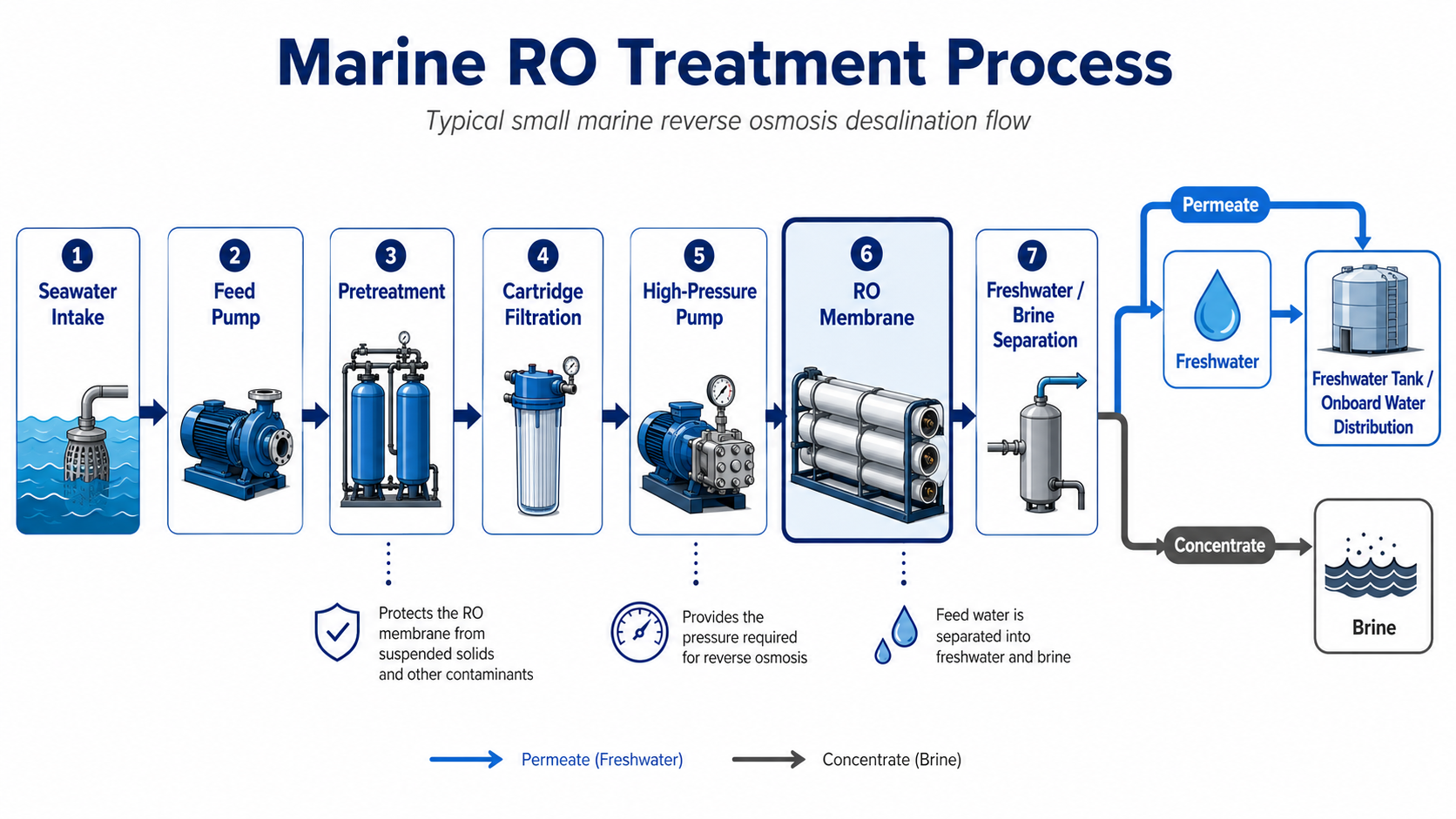
Diagrama de flujo del proceso de desalinización por ósmosis inversa desde la toma de agua de mar hasta el agua dulce
7. Preste atención al pretratamiento
Las membranas de RO son sensibles a los sólidos en suspensión, abordaje, escalada, y ciertos contaminantes químicos.
Por lo tanto, El pretratamiento es una parte importante de un potabilizador marino..
Dependiendo del diseño del sistema y de las condiciones del agua de mar., El pretratamiento puede incluir:
Colador de entrada de agua de mar
Filtración de sedimentos
Filtración de cartucho
Carbón activado u otro tratamiento en su caso
Dosificación de antiincrustante cuando sea necesario
La configuración exacta del pretratamiento debe determinarse de acuerdo con la calidad del agua de mar y los requisitos de la membrana de ósmosis inversa..
Para buques que operan en puertos, zonas costeras, o aguas con alto contenido de sólidos en suspensión, El pretratamiento se vuelve especialmente importante..
8. Seleccione la configuración de membrana RO adecuada
La membrana RO es el componente central de la desalinización..
Al seleccionar un sistema de RO marino, preguntar al proveedor sobre:
Modelo de membrana RO
Cantidad de membrana
Tamaño de membrana
Rechazo
Flujo de diseño
Presión de funcionamiento
Producción esperada de agua dulce
Salinidad del agua de alimentación
Disponibilidad de reemplazo de membrana
La membrana debe seleccionarse de acuerdo con las condiciones previstas del agua de mar en lugar de simplemente elegir la membrana con el mayor rendimiento anunciado..
Un sistema de RO marino diseñado para agua de mar también debe funcionar dentro de la presión recomendada por el fabricante de la membrana., fluir, temperatura, y límites químicos.
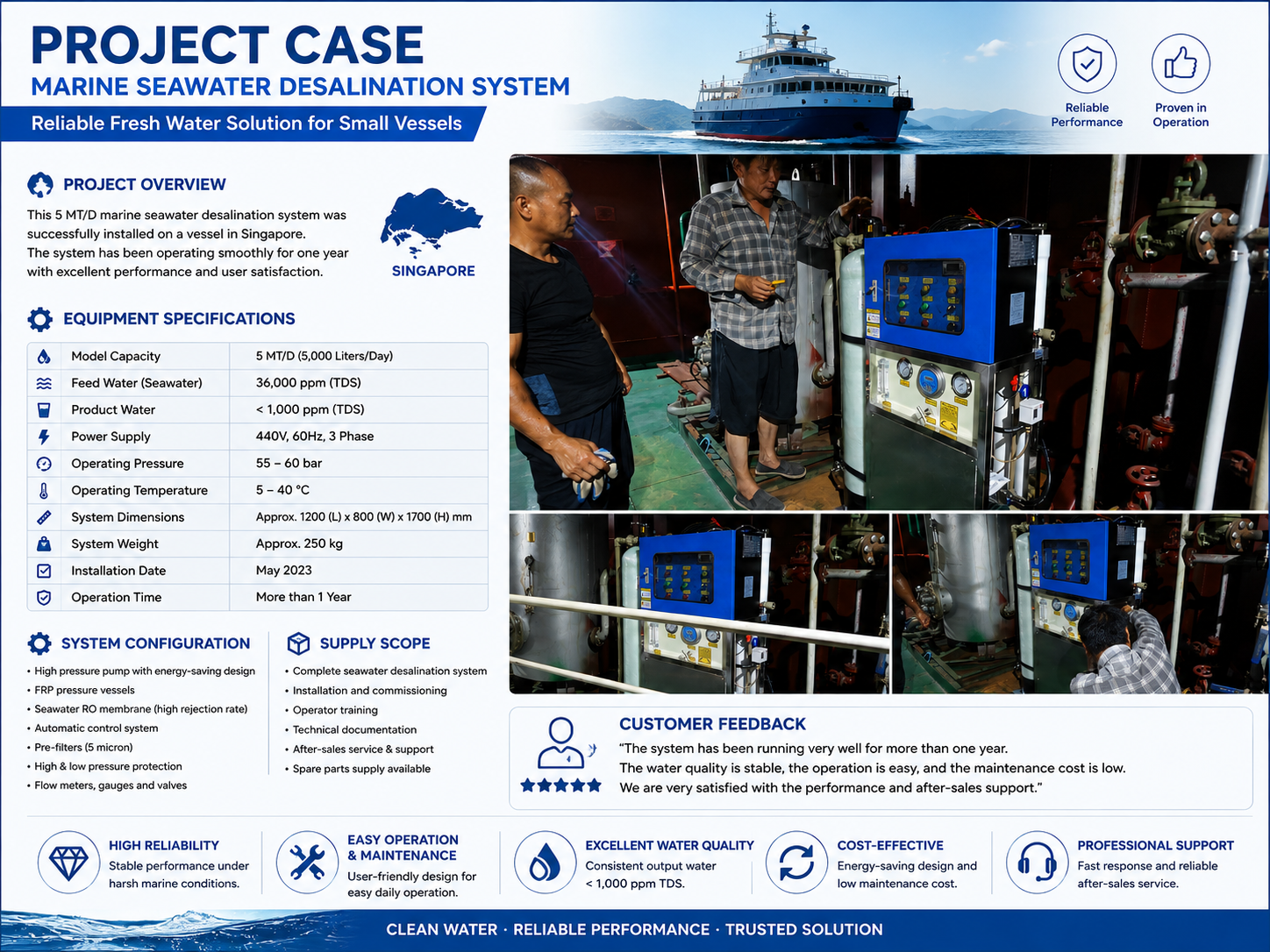
Caso del sistema de agua marina en Singapur
9. Considere la temperatura y la salinidad del agua
La producción de ósmosis inversa no es completamente independiente de las condiciones del agua de mar..
Dos embarcaciones que utilizan el mismo sistema de RO pueden experimentar diferentes tasas de producción si operan en diferentes entornos..
Las variables importantes incluyen:
Temperatura del agua de alimentación
Salinidad / TDS
Turbiedad
Sólidos en suspensión
Contaminación orgánica
Condición de la membrana
Presión de funcionamiento
Por ejemplo, El agua de mar fría puede reducir la producción de permeado de membrana en comparación con el agua de mar más cálida..
Una mayor salinidad también puede aumentar la presión necesaria para la desalinización.
Por lo tanto, al solicitar una cotización, proporcione al proveedor su TDS o salinidad esperada del agua de mar siempre que sea posible.
10. Control y Monitoreo Automático
Para aplicaciones marinas, un sistema de control automático puede hacer que la operación sea más fácil y segura.
Las funciones de monitoreo útiles pueden incluir:
Presión de alimentación
Presión de funcionamiento de ósmosis inversa
flujo de permeado
Flujo de concentrado
Conductividad / TDS
Protección de alta presión
Protección de baja presión
Protección de la bomba
Apagado automático
Un panel de control basado en PLC también puede simplificar la operación para los miembros de la tripulación que tal vez no tengan experiencia especializada en RO.
Para embarcaciones comerciales y offshore, El monitoreo en línea puede ser particularmente valioso porque los operadores pueden identificar condiciones anormales de presión o calidad del agua antes de que se conviertan en problemas mayores..
Pero la máquina automática es difícil de mantener, por lo que elegimos un diseño manual que es mejor para usar en el océano..
11. Piense en el mantenimiento antes de comprar
Un potabilizador marino está expuesto al agua de mar., vibración, humedad, y condiciones de funcionamiento cambiantes.
Por lo tanto, El mantenimiento debe considerarse durante la etapa de selección..
Pregunta a tu proveedor:
¿Con qué frecuencia se deben reemplazar los filtros de cartucho??
¿Con qué frecuencia se debe limpiar la membrana RO??
¿Qué productos químicos se requieren para la limpieza??
¿Están disponibles las membranas de repuesto??
¿Se utilizan bombas y válvulas estándar??
¿Puede el sistema ser reparado por un técnico local??
¿Está disponible el soporte técnico remoto??
Un sistema con filtros de fácil acceso, zapatillas, valvulas, y los instrumentos pueden reducir el tiempo de inactividad.
Para un buque que opera lejos del puerto, La disponibilidad de repuestos puede ser tan importante como el precio inicial del equipo..
12. Compare proveedores antes de solicitar una cotización
Al comparar proveedores de desalinización marina por ósmosis inversa, no compares el precio solo.
Solicite a cada proveedor que proporcione la siguiente información:
| Artículo | Información para solicitar |
| Capacidad de agua dulce | m³/día o L/hora |
| Agua de alimentación | TDS de agua de mar / salinidad |
| Recuperación | Tasa de recuperación del diseño |
| Presión de funcionamiento | bar / MPA |
| Membrana RO | Marca y modelo |
| Bomba de alta presión | Marca y modelo |
| Fuente de alimentación | Voltaje / fase / frecuencia |
| Consumo de energía | KW |
| Dimensiones | Largo × ancho × alto |
| Peso | kg |
| Sistema de control | Manual / Automático / SOCIEDAD ANÓNIMA |
| Material | SS304 / SS316 / otro |
| Calidad del agua | TDS permeado / conductividad |
| Garantía | Período de garantía |
| Piezas de repuesto | Disponibilidad |
| Entrega | Tiempo de producción y envío. |
Esta información hace que sea mucho más fácil comparar diferentes sistemas de forma comparable..
13. ¿Qué información debe enviar a un proveedor de RO marino??
Si desea una cotización precisa, proporcionar tanta información técnica como sea posible.
Una buena RFQ debe incluir:
- Tipo de embarcación:
Yate, barco de pesca, barco de trabajo, barco comercial, buque de alta mar, etc.. - Necesidad de agua dulce:
Por ejemplo, 5 m³/día, 10 m³/día, o 15 m³/día,20m3/día. - Número de personas a bordo:
Tripulación y pasajeros. - Condiciones del agua de mar:
TDS o salinidad, temperatura, y ubicación si está disponible. - Fuente de alimentación:
12 En DC, 24 En DC, 220 V CA, 380 V CA, etc.. - Espacio de instalación:
Disponible largo × ancho × alto. - Destino de agua dulce:
Tanque de agua dulce, sistema de agua potable, agua de servicio general, etc.. - Requisitos de automatización:
control manual, control automático, SOCIEDAD ANÓNIMA, monitoreo de conductividad, etc..
Proporcionar esta información permite al fabricante recomendar una configuración más adecuada en lugar de simplemente enviar una lista de precios estándar..
Lista de verificación de selección de unidades de desalinización por ósmosis inversa marina pequeña
Antes de realizar el pedido, comprueba lo siguiente:
Se ha calculado la demanda diaria de agua dulce.
Se confirma el tipo de embarcación y el tamaño de la tripulación.
Se ha seleccionado la capacidad de RO requerida
Se confirma suministro de energía eléctrica
Las dimensiones de instalación están disponibles.
Se conoce la salinidad del agua de mar/TDS
Se considera la temperatura del agua de mar.
Se confirman los requisitos de pretratamiento
Se especifica el modelo de membrana RO
Se especifica la bomba de alta presión
Se confirma el requisito de calidad del agua dulce
Se confirman los requisitos de control automático.
Acceso de mantenimiento disponible
Se confirma la disponibilidad de repuestos.
La garantía y el soporte posventa son claros
5 m³/día, 10 m³/día o 15 m³/día: ¿Qué sistema de ósmosis inversa marino es el adecuado para usted??
No hay una respuesta universal.
A 5 m³/día unidad desaladora marina por ósmosis inversa puede ser apropiado para un yate pequeño, barco de pesca, o embarcación con demanda moderada de agua dulce.
A 10 m³/día sistema de RO marino puede ser más adecuado para embarcaciones con tripulaciones más grandes, mayor consumo, o períodos de operación offshore más prolongados.
A 15 potabilizadora marina RO de m³/día Puede proporcionar capacidad adicional para barcos pesqueros más grandes., barcos de trabajo, buques de alta mar, y otras aplicaciones con mayor demanda de agua dulce.
La mejor selección es el sistema que proporciona suficiente producción de agua dulce y al mismo tiempo iguala la potencia disponible de su embarcación., espacio de instalación, condiciones del agua de mar, horario de funcionamiento, y requisitos de mantenimiento.
Conclusión
La selección de una pequeña unidad de desalinización marina por ósmosis inversa debe comenzar con sus necesidades reales de agua dulce en lugar de simplemente elegir el modelo más grande disponible..
Los factores más importantes son:
Demanda de agua dulce + tipo de embarcación + fuente de alimentación + espacio de instalación + calidad del agua de mar + Configuración de membrana RO + requisitos de mantenimiento.
Para pequeñas aplicaciones marinas, compacto 5 m³/día, 10 m³/día, y 15 m³/día sistemas de ósmosis inversa de agua de mar Puede proporcionar opciones flexibles para yates., barcos de pesca, barcos de trabajo, y otros buques.
Si no está seguro de qué capacidad es la adecuada para su embarcación, proporcione su tipo de embarcación, número de personas a bordo, producción de agua dulce requerida, fuente de alimentación disponible, TDS de agua de mar, y espacio de instalación disponible. Luego, un fabricante de RO marino puede recomendar la configuración adecuada..
Solicite una cotización de sistema de desalinización marina por ósmosis inversa
Buscando un compacto unidad de desalinización marina por ósmosis inversa para tu barco o yate?
Contacta con Besta con la siguiente información:
Tipo de embarcación + Capacidad de agua dulce + Fuente de alimentación + TDS de agua de mar + Espacio de instalación
Nuestro equipo técnico puede ayudarle a evaluar la configuración de RO marino adecuada para su aplicación..
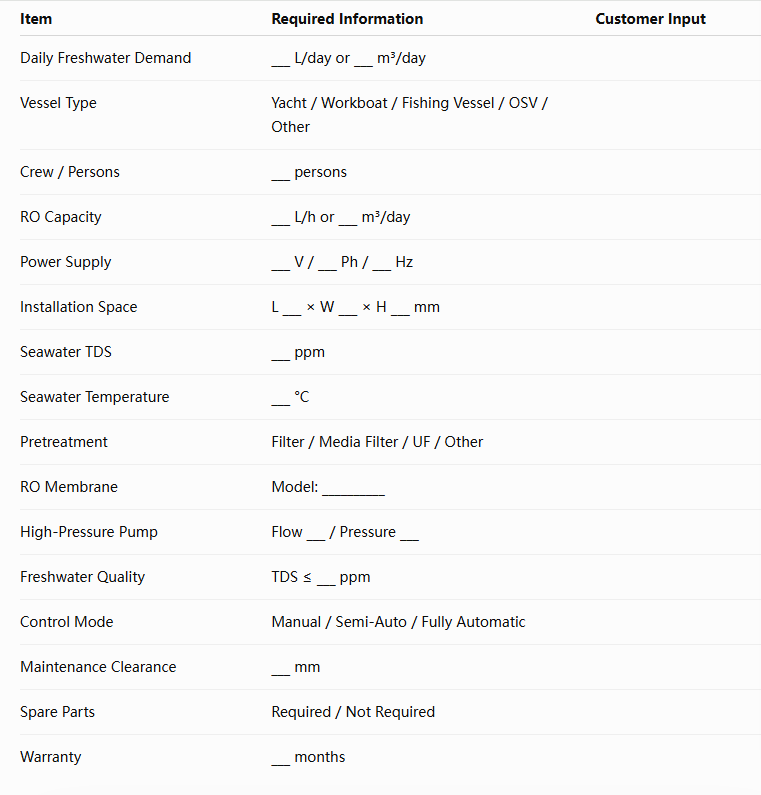
lista de verificación para el sistema RO
