
 info@best-filtration.com
 MBR Membrane
 Reverse Osmosis Membrane
 Residential Ro Membrane
 UF Membrane
 Water Treatment Plant
 Residential Ro Machine
 Brackish Ro System
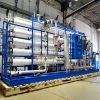 Sea water system/SW RO plant
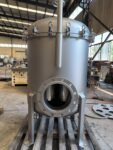 Bag Filter
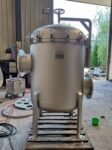 Cartridge Filter
 Commercial Water Filtration System
 Membrane Cleaning System(CIP)
 Consumables Accessories


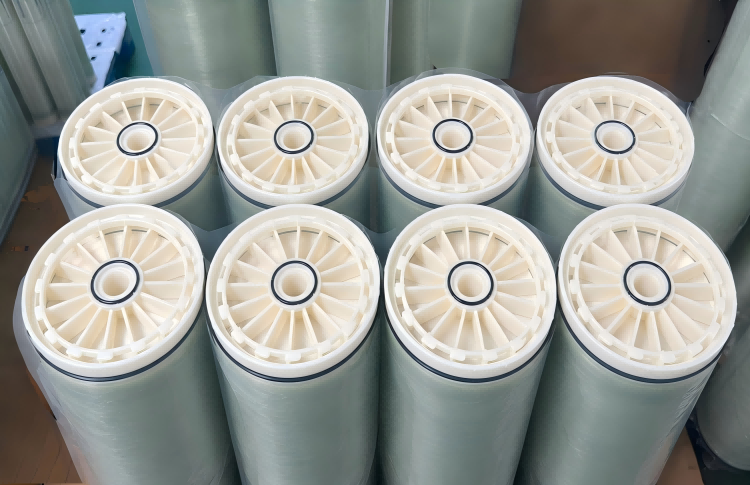
RO Membrane Connection Methods: Understanding Interlocking End Caps and DuPont iLEC Alternatives
A self-locking RO membrane can make RO membrane installation easier and reduce the need for separate interconnectors between membrane elements. In this article, we explain how self-locking RO membrane technology works, how DuPont iLEC is designed, and what alternatives are available for 8-inch RO membrane systems.
What Are the Main RO Membrane Connection Methods?
In the market, most 8-inch RO systems use a traditional interconnector. A small connector joins the permeate tubes of two membrane elements. O-rings create the seal at both ends. This design has been widely used for many years because it is simple and compatible with standard pressure vessels.
However, a traditional connector also has moving sealing points. During loading, unloading, or operation, an O-ring can roll, pinch, twist, or wear. As a result, a small sealing problem can affect permeate quality or increase maintenance work. DuPont describes these risks in its FilmTec technical documents.
Another approach uses an interlocking end cap. Instead of using a separate connector between two elements, the end caps lock together directly. This is the basic idea behind DuPont FilmTec iLEC technology.
What Is an Interlocking End Cap?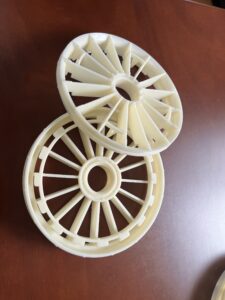
An interlocking end cap connects two RO membrane elements through a designed locking structure. The connection does not need the same type of separate interconnector used in a standard slip-fit system.
In DuPont’s iLEC design, one end cap has locking tabs and the other end cap has matching features. When two elements connect, the parts snap together and give the installer clear feedback.
First, this design can make installation easier. The installer does not need to handle a separate interconnector between every pair of elements. In addition, DuPont says iLEC provides immediate feedback on connection tightness.
Next, the design can reduce the number of potential O-ring leak points. DuPont also notes that iLEC does not require lubricant during installation. This feature can be useful in applications where product water quality matters.
Moreover, the interlocking structure can reduce restrictions in the permeate path. DuPont says conventional couplers can increase flow resistance because their internal diameter is smaller than the product water tube. Therefore, removing the separate coupler can help reduce permeate pressure drop.
The Main Advantages of Interlocking End Caps
First, installation can be more straightforward. Operators can connect the membrane elements without installing a separate interconnector between them.
Second, maintenance can become simpler. A system with fewer separate connectors can reduce the number of spare parts that technicians need to keep.
Third, the design can reduce the risk of O-ring damage. DuPont states that iLEC helps prevent O-rings from rolling or becoming pinched during installation and operation.
Fourth, the design can support stable permeate quality. A damaged seal can allow unwanted leakage, so better sealing can help protect product water quality.
Finally, the design can reduce permeate-side pressure loss. This benefit may support lower energy use in some system designs.
The Possible Limitations
Interlocking end caps also come with practical considerations.
First, the end-cap design must match the membrane element and the pressure vessel configuration. Therefore, buyers should confirm element length, diameter, product water tube dimensions, and connection design before replacement.
Second, an interlocking element is not automatically equal to another membrane just because both products have a similar end-cap design. Membrane chemistry, active area, feed spacer thickness, salt rejection, flow, and operating limits still matter.
Third, buyers should not assume that a membrane with an interlocking end cap will always produce the same water quality as the original element. The final result depends on feed water, pressure, temperature, recovery, system design, and membrane selection.
For this reason, a proper replacement should compare both the connection structure and the membrane performance.
Why Is DuPont iLEC So Well Known?
DuPont introduced iLEC as a patented interlocking end-cap technology for FilmTec RO and NF elements. DuPont’s current FAQ states that the company is currently the only manufacturer worldwide with its patented iLEC technology.
In other words, iLEC is a specific DuPont technology and product concept.
However, this point needs a clear explanation. “iLEC” is DuPont’s patented design. It does not mean that no other manufacturer can develop an interlocking or self-locking connection concept.
Instead, the key difference is the specific technology. DuPont owns the iLEC patent and uses it on a range of FilmTec membrane elements. Therefore, other membrane manufacturers that offer alternative interlocking designs should not present their products as original DuPont iLEC elements.
In practice, the key question is compatibility. A membrane supplier can offer an alternative element with an interlocking-end-cap structure, but the supplier should confirm the mechanical dimensions and the membrane performance for the intended system.
Which DuPont Membranes Use iLEC?
DuPont currently lists a range of RO and NF elements with iLEC. These products cover brackish water RO, seawater RO, and specialty applications.
Selected Brackish Water RO Models
- FilmTec BW30 PRO-400/34i
- FilmTec BW30HRLE-440i
- FilmTec BW30XFRLE-400/34i
- FilmTec BW30XHR PRO-400/34i
- FilmTec Eco Pro-400i
- FilmTec Eco Pro-440i
For example, DuPont describes the BW30 PRO-400/34i as a high-rejection brackish water RO element with iLEC interlocking end caps.
DuPont also describes the BW30XHR PRO-400/34i as an extra-high-rejection brackish water element with iLEC. It highlights applications that require stringent permeate quality and high rejection of silica and other contaminants.
Selected Seawater RO Models
- FilmTec SW30XHR-400i
- FilmTec SW30XHR-440i
- FilmTec SW30HRLE-440i
- FilmTec SW30XLE-440i
- FilmTec SW30XFR-400/34i
DuPont’s official data sheet confirms that the SW30XHR-400i uses iLEC interlocking end caps.
Specialty Models
DuPont also lists iLEC versions for specialty applications. These include SG30-400/34i and NF90-400/34i. The SG30-400/34i, for example, targets high-purity water applications and uses iLEC interlocking end caps.
The exact product portfolio can change over time. Therefore, buyers should check the latest technical data sheet before selecting a replacement.
Besta Membrane: Interlocking-End-Cap RO Membrane Alternatives
For customers who want an alternative to DuPont iLEC elements, Besta Membrane provides compatible 8-inch RO membrane options with an interlocking-end-cap design.
Our goal is simple. We want customers to keep their existing pressure vessels and reduce the need for major mechanical changes when they replace membrane elements.
For example, Besta Membrane offers the following replacement models:
| Besta Membrane Model | DuPont Reference Model | Main Application |
|---|---|---|
| BMBW-8040-400-34i | BW30 PRO-400/34i | Brackish Water RO |
| BMBW-8040-440i | BW30HRLE-440i | Brackish Water RO |
| BMSW8040-400i | SW30XHR-400i | Seawater RO |
| BMSW8040-440i | SW30XLE-440i | Seawater RO |
These models use an interlocking-end-cap structure for 8-inch RO membrane applications. Therefore, they can be considered when a project needs an alternative with a similar connection concept.
At the same time, replacement should always start with a technical check. The user should compare active area, feed spacer thickness, permeate flow, salt rejection, pressure, temperature, pH limits, and vessel dimensions.
In addition, the system designer should check the number of elements per vessel and the system recovery.
Why Choose an Alternative Interlocking RO Membrane?
First, replacement can be easier when the new element matches the existing connection concept. This approach can help reduce changes to the pressure vessel and installation process.
Second, customers can gain another sourcing option. A reliable alternative can help when the original brand has a long lead time, a high price, or limited local availability.
Third, Besta Membrane can discuss membrane selection based on the actual feed water and application. Therefore, the replacement does not have to be a simple model-to-model comparison. It can also include a system-level review.
Moreover, an alternative membrane should not focus only on the end cap. The membrane sheet, feed spacer, active area, salt rejection, flow rate, and operating window are equally important.
For this reason, Besta Membrane treats interlocking-end-cap RO elements as a complete membrane product, not only as an end-cap replacement.
DuPont iLEC vs. Besta Alternative: What Should Buyers Compare?
The table below gives a simple comparison framework.
| Item | DuPont iLEC | Besta Membrane Alternative |
|---|---|---|
| Connection concept | Interlocking end cap | Interlocking end cap |
| Typical size | 8-inch RO element | 8-inch RO element |
| Separate interconnector | Not required between compatible iLEC elements | Designed to avoid a separate interconnector between compatible elements |
| Replacement focus | Original FilmTec design | Mechanical compatibility and membrane performance |
| Product selection | FilmTec portfolio | Besta model range and project conditions |
This table is a starting point, not a statement that every element has identical performance.
Instead, buyers should use the model data sheet and project conditions to confirm compatibility.
A Practical Guide to Selecting a Self-Locking RO Membrane
First, confirm the membrane size. Most commercial and industrial products in this discussion are 8-inch elements.
Next, confirm the connection type. Check whether the system uses a standard interconnector or an interlocking-end-cap design.
Then, check the pressure vessel. Confirm the internal diameter, element length, and available vessel space.
After that, compare membrane performance. Look at active area, feed spacer thickness, permeate flow, and salt rejection.
Also, check the water conditions. Feed TDS, temperature, SDI, hardness, silica, and recovery can all affect membrane selection.
Finally, confirm the system design. A replacement element should fit the vessel and deliver the required permeate flow and water quality under the actual operating conditions.
Conclusion
Interlocking end caps are a practical development in RO membrane connection design. They can simplify installation, reduce separate parts, and lower some sealing risks.
DuPont FilmTec iLEC is a well-known example. According to DuPont’s current FAQ, iLEC is a patented DuPont technology, and DuPont currently describes itself as the only manufacturer worldwide using its patented iLEC technology.
At the same time, customers do not have to stop at one brand when they need an interlocking-end-cap membrane. Besta Membrane manufactures alternative 8-inch RO membrane elements designed around the same general connection concept.
Models such as BMBW-8040-400-34i, BMBW-8040-440i, BMSW8040-400i, and BMSW8040-440i give buyers additional options for brackish water and seawater RO applications.
Most importantly, good replacement starts with data. Connection design, dimensions, membrane performance, and operating conditions should all match the project.
If your system currently uses a DuPont iLEC element, Besta Membrane can review the existing model and provide a suitable alternative for your application.
Note: Besta Membrane is an independent manufacturer and is not affiliated with or endorsed by DuPont. DuPont and FilmTec are trademarks of their respective owners.
