
 info@best-filtration.com
 MBR Membrane
 Reverse Osmosis Membrane
 Residential Ro Membrane
 UF Membrane
 Water Treatment Plant
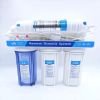 Residential Ro Machine
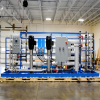 Brackish Ro System
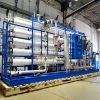 Sea water system/SW RO plant
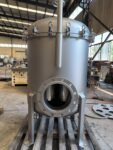 Bag Filter
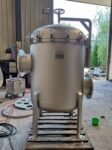 Cartridge Filter
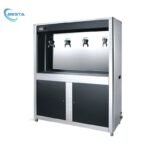 Commercial Water Filtration System
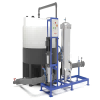 Membrane Cleaning System(CIP)
 Consumables Accessories


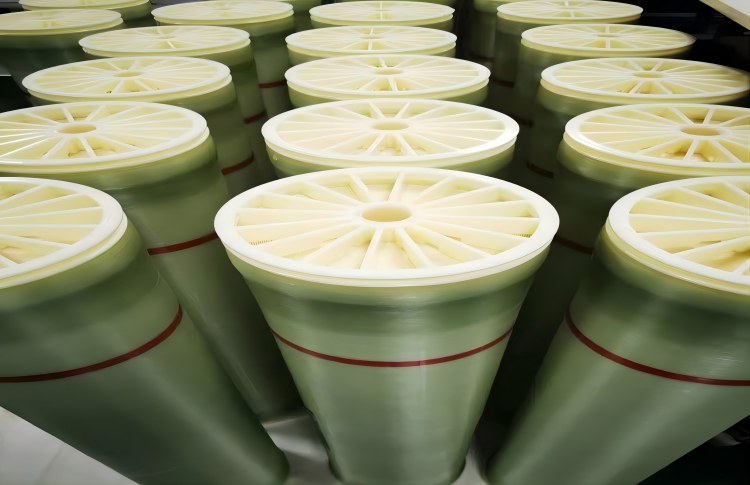
RO membrane cleaning is one of the most important parts of reverse osmosis system maintenance.
When an RO system starts to lose permeate flow, the pressure drop increases, or salt rejection becomes unstable, membrane fouling may be the reason. However, cleaning the membrane is not simply a matter of adding a chemical and starting the pump.
The RO membrane cleaning sequence matters.
More importantly, the correct cleaning order depends on the type of foulant on the membrane surface. Scale, organic matter, colloids, and biofouling do not respond to the same cleaning chemistry.
For this reason, operators should not always use the same cleaning sequence.
In this guide, we explain how acid and alkaline cleaning work, when each chemical should be used, and how to choose a practical cleaning sequence for different RO membrane fouling problems.
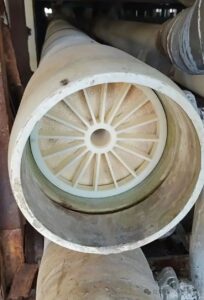
Choosing the right cleaning method helps maintain RO membrane performance and service life
We will also explain how a fouling-resistant RO membrane can help reduce the impact of fouling and make long-term RO operation more stable.
Why Does an RO Membrane Need Chemical Cleaning?
An RO membrane separates dissolved salts and other contaminants from water. During normal operation, however, some materials can accumulate on the membrane surface.
These materials may include:
- Calcium carbonate scale
- Metal oxides and hydroxides
- Silica and other mineral deposits
- Organic matter
- Colloidal particles
- Microorganisms
- Biological slime and biofilm
- Oil and other difficult organic contaminants
Over time, these foulants can form a complex layer on the membrane.
As a result, the membrane may produce less permeate water. At the same time, the feed pressure or pressure drop may increase.
Therefore, regular monitoring is important.
Operators should compare normalized permeate flow, salt passage, and pressure drop with the clean or baseline performance of the RO system.
When the change reaches the cleaning limit recommended by the membrane manufacturer, chemical cleaning may be necessary.
Acid Cleaning vs. Alkaline Cleaning
The simplest way to understand RO membrane cleaning is to look at the type of foulant.
Acid cleaning
Acid cleaners are mainly useful for many inorganic deposits.
For example, acid cleaning can help remove:
- Calcium carbonate scale
- Some metal oxides
- Some metal hydroxides
- Other acid-soluble mineral deposits
Acid attacks mineral deposits and helps dissolve them from the membrane surface.
However, acid is not a universal RO membrane cleaner.
If the membrane has a large amount of organic matter or biofilm, acid cleaning may not be the best first step.
Alkaline cleaning
Alkaline cleaners are commonly used for:
- Organic fouling
- Biofouling
- Biological residues
- Colloidal and particulate fouling
- Some oil-related contamination
Alkaline cleaning can loosen and remove organic material from the membrane surface.
For difficult organic fouling, the cleaning solution may also contain a suitable surfactant or chelating agent, depending on the foulant and the membrane manufacturer’s cleaning limits.
Therefore, the correct question is not simply:
“Should I use acid or alkaline first?”
The better question is:
“What is fouling my RO membrane?”
Is the Correct RO Membrane Cleaning Sequence Always Acid First?
No.
This is one of the most important points for RO system operators.
There is no universal rule that says every RO membrane must be cleaned with acid first.
In fact, DuPont FilmTec’s current technical manual recommends alkaline cleaning as the first step for many mixed-fouling conditions. It recommends acid as the first step when the operator knows that the fouling consists only of calcium carbonate or iron oxide/hydroxide.
For a system with organic fouling, colloidal fouling, or biofouling combined with calcium carbonate, the recommended approach can be:
Alkaline cleaning → acid cleaning
The reason is simple.
First, the alkaline cleaner removes organic and biological material. Then, the acid cleaner can reach and dissolve mineral deposits more effectively.
This sequence can be especially useful when the membrane has a mixture of organic fouling and mineral scale.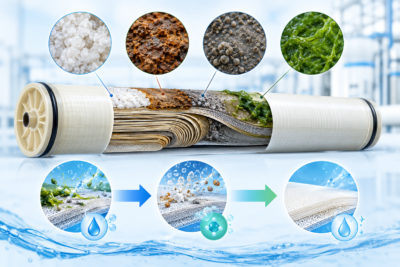
Why Can Mixed Fouling Be Difficult to Clean?
RO membrane fouling is often more complicated than a single layer of scale.
Imagine a membrane surface covered with several different materials.
Mineral particles may sit together with organic matter. At the same time, microorganisms may produce extracellular polymeric substances, commonly called EPS. These substances can make biofilm sticky and difficult to remove.
As a result, the foulant can behave like a composite layer.
The outer layer may contain organic material and biological slime, while mineral deposits can remain underneath.
Therefore, removing one type of foulant can make it easier to reach another type.
This is why a two-step cleaning process can work better than using only one chemical.
When Should You Use Alkaline Cleaning First?
Alkaline-first cleaning is often a practical choice when the RO system shows signs of organic or biological fouling.
Typical signs include:
- A gradual decrease in normalized permeate flow
- Increasing pressure drop
- Sticky or slimy deposits
- Biological growth in pretreatment equipment
- Organic contamination in the feed water
- Surface water or wastewater applications
- Reclaimed water applications
- Frequent biofouling problems
A strong biological fouling problem may require more than one cleaning cycle.
For example, an operator may use an alkaline cleaning step to remove biological and organic material. After a suitable flush, an acid cleaning step can target remaining mineral scale.
However, the exact chemical concentration, pH, temperature, flow rate, and soaking time should always follow the membrane manufacturer’s technical limits.
Do not assume that a stronger chemical solution will always clean the membrane better.
In fact, excessive pH, temperature, pressure, or chemical concentration can damage an RO membrane.
When Should You Use Acid Cleaning First?
Acid-first cleaning can make sense when the foulant is known to be mainly acid-soluble mineral scale.
A common example is calcium carbonate scale.
Other possible targets include certain iron oxides and hydroxides.
Typical signs of scaling may include:
- White or gray mineral deposits
- A rough membrane surface
- Increasing pressure drop
- Lower normalized permeate flow
- Higher feed pressure requirements
- A known high scaling tendency in the feed water
However, visual inspection alone is not enough to identify the foulant with certainty.
If possible, operators should review the feed-water chemistry, antiscalant program, recovery rate, pH, hardness, iron level, silica level, and other operating data.
Therefore, chemical cleaning should start with diagnosis rather than guesswork.
What About Biofouling?
Biofouling deserves special attention.
A biological layer can contain microorganisms, organic residues, and sticky extracellular material.
This layer can become difficult to remove when it grows for a long time.
As a result, the RO system may experience:
- Increasing pressure drop
- Lower permeate flow
- Higher energy consumption
- More frequent cleaning
- Shorter membrane service life
For biofouling, an alkaline cleaning step is often an important part of the cleaning program.
After the organic and biological material has been removed, an acid cleaning step may help remove mineral deposits that were trapped inside the fouling layer.
In severe cases, the cleaning program may require repeated alkaline and acid steps.
However, the exact sequence should depend on the actual foulant and the membrane manufacturer’s recommendations.
Why “Alkaline → Acid” Can Work Well for Mixed Fouling
Consider a membrane with both biofilm and calcium carbonate scale.
If the surface contains a thick organic layer, the acid solution may not reach the mineral deposit efficiently.
The first alkaline cleaning step can loosen and remove much of the organic and biological material.
After that, the mineral layer becomes more accessible.
Then, the acid solution can attack acid-soluble scale.
This creates a simple cleaning logic:
Remove organic material first → expose mineral deposits → dissolve the remaining scale
That is why alkaline-first cleaning is often recommended for mixed organic, colloidal, biological, and mineral fouling.
At the same time, if the membrane contains only known calcium carbonate or iron oxide/hydroxide deposits, acid-first cleaning may be appropriate.
So, the cleaning sequence should follow the foulant.
A Practical RO Membrane Cleaning Decision Guide
| Main Fouling Type | Common Signs | Typical First Cleaning |
|---|---|---|
| Calcium carbonate scale | White mineral deposits, scaling tendency | Acid |
| Iron oxide/hydroxide | Yellow, orange, or brown deposits | Acid may be suitable |
| Organic fouling | Sticky organic layer, reduced flow | Alkaline |
| Biofouling | Slime, biological growth, pressure increase | Alkaline |
| Colloidal fouling | Fine particles, pressure increase | Usually alkaline |
| Mixed organic + scale | Slime plus mineral deposits | Alkaline → Acid |
| Mainly mineral scale | Hard mineral deposits | Acid |
| Unknown fouling | Unclear symptoms | Diagnose first |
This table is a practical guide, not a replacement for the membrane manufacturer’s cleaning instructions.
How to Know What Is Fouling Your RO Membrane
Before cleaning an RO membrane, collect as much information as possible.
1. Check system performance
Look at:
- Permeate flow
- Feed pressure
- Concentrate pressure
- Pressure drop
- Salt rejection
- Normalized permeate flow
Comparing current data with baseline data can help identify changes in membrane performance.
2. Check feed-water quality
Review:
- TDS
- Hardness
- Alkalinity
- Iron
- Manganese
- Silica
- TOC
- Turbidity
- SDI
- Microbial activity
Feed-water changes often explain why a membrane starts fouling faster.
3. Inspect the membrane when appropriate
If the system requires membrane removal, inspect the element carefully.
White and hard deposits may suggest mineral scaling.
Slimy or slippery deposits may suggest biological or organic fouling.
Yellow or brown deposits may indicate iron-related fouling.
However, appearance alone cannot provide a complete chemical diagnosis.
For difficult cases, laboratory foulant analysis can provide much better information.
Important RO Membrane Cleaning Rules
Correct cleaning chemistry is important, but cleaning operation is equally important.
1. Follow the membrane manufacturer’s limits
Every RO membrane has limits for:
- pH
- Temperature
- Cleaning chemicals
- Flow rate
- Pressure
- Soaking time
Therefore, do not copy a cleaning recipe from another membrane without checking compatibility.
2. Flush before changing chemicals
Never mix acid and alkaline cleaning solutions directly.
After one cleaning step, flush the system thoroughly before introducing another chemical.
This is especially important when changing from a high-pH cleaner to a low-pH cleaner.
3. Monitor pH during cleaning
The cleaning solution can change pH as it reacts with foulants.
Therefore, operators should monitor pH during circulation and adjust the solution when necessary.
For example, the FilmTec technical manual recommends monitoring pH and adding chemical when the cleaning solution moves outside the specified range.
4. Use the correct cleaning flow
Cleaning is not simply about high pressure.
The cleaning system should provide enough flow across the membrane surface to remove loosened foulants while keeping pressure drop within the membrane manufacturer’s limits.
High pressure does not automatically mean better cleaning.
5. Do not ignore soaking
Some fouling needs contact time.
A controlled soaking period can help the cleaning solution penetrate and loosen the foulant.
However, the solution should not simply sit for an excessive period without monitoring.
Temperature and chemical strength can change during soaking.
Therefore, follow the recommended cleaning procedure.
How Fouling-Resistant RO Membranes Can Help
Chemical cleaning is only one part of good RO operation.
The better strategy is to reduce fouling before it becomes severe.
This is where membrane selection becomes important.
A membrane designed for difficult feed water can provide an additional layer of protection against fouling-related operating problems.
Besta Membrane offers several RO membrane solutions for different water conditions.
For example, the Besta FR series fouling-resistant RO membranes are designed for complex water sources. Besta states that the FR series uses a special membrane preparation process to improve hydrophilicity, surface charge characteristics, and surface properties. The design aims to reduce biofouling and pollutant adsorption on the membrane surface.
The BMBW-8040-FR is also designed for brackish water applications and complex feed water. Besta lists applications such as surface water, mining wastewater, municipal reclaimed water, industrial wastewater, and brackish water treatment.
The 34 mil feed spacer design is intended to help reduce fouling and pressure drop and support cleaning durability.
This makes the FR series worth considering for systems where conventional RO membranes face frequent fouling problems.
Besta RO Membranes for Different Applications
Besta’s RO membrane portfolio covers several water-treatment applications.
Besta FR Brackish Water RO Membranes
For industrial and commercial systems with complex feed water, the BMBW-4040-FR and BMBW-8040-FR are designed for brackish water treatment.
The 4040 FR model focuses on low-pressure operation, high permeate flow, and desalination performance.
The 8040 FR model is designed for larger industrial systems and complex water sources.
Besta Seawater RO Membranes
For seawater desalination, Besta offers SW series membrane elements.
The portfolio includes models such as:
- BMSW-4040
- BMSW-8040
- BMSW-8040-400-HR
- BMSW-8040-440-HR
- BMSW-8040-440-HF
Besta describes its SW series as fouling-resistant and scaling-resistant aromatic polyamide composite membrane elements for complex water quality.
For example, the BMSW-8040-440-HR is designed for high desalination performance, while the BMSW-8040-440-HF focuses on high flux.
Besta Residential RO Membranes
For household and small water purification systems, Besta also supplies residential RO membrane elements.
The residential range includes 75G, 100G, 150G, 200G, 300G, and 400G models.
These membranes are designed for low-pressure household RO systems and applications such as tap water and well water treatment.
Membrane Selection and Cleaning Work Together
A good RO system does not depend on cleaning alone.
Instead, several factors work together:
Good pretreatment + correct membrane selection + stable operation + timely cleaning = better RO performance
For example, a fouling-resistant membrane cannot replace good pretreatment.
Likewise, good pretreatment cannot completely eliminate fouling.
Therefore, operators should consider the complete system.
Pretreatment should control suspended solids, colloids, organic matter, hardness, and biological growth as required by the feed-water quality.
At the same time, the RO membrane should match the water source and operating conditions.
Finally, the operator should monitor performance and clean the membrane before fouling becomes severe.
Common Mistakes in RO Membrane Cleaning
Mistake 1: Always cleaning with acid first
Acid-first cleaning is not suitable for every type of fouling.
If the membrane has significant organic or biological fouling, an alkaline-first approach may be more appropriate.
Mistake 2: Always cleaning with alkaline first
The opposite mistake is also possible.
If the membrane has heavy mineral scale and the foulant is known to be acid-soluble, acid cleaning may be the better first step.
The correct order depends on the foulant.
Mistake 3: Using stronger chemicals
More chemical does not always mean better cleaning.
Excessive chemical concentration, pH, or temperature can shorten membrane life or cause irreversible membrane damage.
Therefore, stay within the membrane manufacturer’s limits.
Mistake 4: Waiting until the membrane is severely fouled
Severe fouling can be much harder to remove.
In addition, a heavily fouled membrane may require more cleaning cycles and more chemical consumption.
Therefore, preventive monitoring is usually better than waiting for a major performance drop.
A Better RO Membrane Cleaning Strategy
A practical cleaning strategy can follow five steps.
Step 1: Monitor
Record normalized permeate flow, pressure drop, feed pressure, and salt rejection.
Step 2: Diagnose
Determine whether the main problem is scale, organic fouling, biofouling, colloids, or a combination.
Step 3: Select the chemistry
Choose acid or alkaline cleaning based on the actual foulant.
Step 4: Clean carefully
Follow the membrane manufacturer’s limits for pH, temperature, flow, pressure, and cleaning time.
Step 5: Prevent recurrence
After cleaning, investigate why the fouling happened.
Check pretreatment, recovery, antiscalant dosing, feed-water changes, filtration, and biological control.
This last step is often overlooked.
However, removing the foulant without fixing the cause only solves the problem temporarily.
Final Thoughts: Clean According to the Foulant, Not a Fixed Rule
The most important lesson is simple:
There is no single RO membrane cleaning sequence that works for every fouling condition.
For mainly mineral scale, acid cleaning may be appropriate.
For organic or biological fouling, alkaline cleaning is often the better starting point.
For mixed organic and mineral fouling, an alkaline → acid sequence can be effective.
However, if the membrane is known to have only acid-soluble calcium carbonate or iron oxide/hydroxide deposits, acid-first cleaning may be appropriate.
Therefore, the best cleaning program starts with fouling diagnosis.
At the same time, membrane selection matters.
For difficult water sources, a fouling-resistant membrane can help operators manage fouling risk and support more stable RO operation.
Besta Membrane provides residential, commercial, brackish water, and seawater RO membrane solutions for different water-treatment applications. Its FR series is designed for complex feed water, while its SW series provides options for seawater desalination and high-salinity applications.
If you are replacing an existing RO membrane, Besta can also provide equivalent membrane options for commonly used FilmTec, Hydranautics, Toray, LG Chem, and other membrane models.
The right membrane and the right cleaning strategy should always work together.
Choose the membrane for the water. Choose the cleaning chemistry for the foulant. And always follow the membrane manufacturer’s cleaning limits.
