
 info@best-filtration.com
 MBR Membrane
 Reverse Osmosis Membrane
 Residential Ro Membrane
 UF Membrane
 Water Treatment Plant
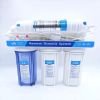 Residential Ro Machine
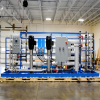 Brackish Ro System
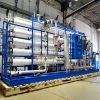 Sea water system/SW RO plant
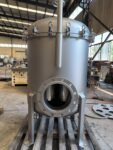 Bag Filter
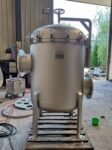 Cartridge Filter
 Commercial Water Filtration System
 Membrane Cleaning System(CIP)
 Consumables Accessories


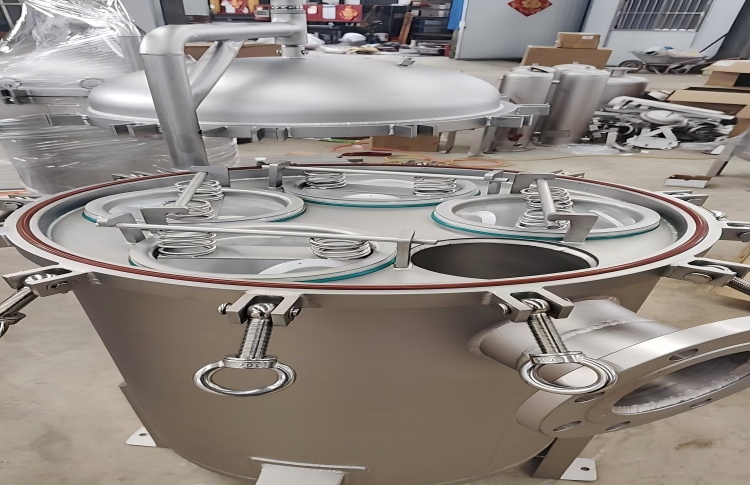
A practical bag filter selection guide for temperature, pressure, viscosity, corrosion, and solids
Bag filters are common in industrial liquid filtration.
They are simple, practical, and cost-effective.
Also, they can handle many common liquid filtration tasks.
However, a bag filter is not a universal solution.
Some process conditions need more care.
For example, high temperature can limit filter media life.
Likewise, high viscosity can increase pressure loss.
Very fine particles can also need a different filter design.
In addition, strong chemicals can create material risks.
Finally, high solids can cause rapid filter loading.
Therefore, filter selection should start with the process.
It should not start with the lowest purchase price.
At Besta Membrane, we supply industrial filtration products for many process needs.
Our range includes bag filters, filter bags, cartridge filters, UF membranes, and other filtration solutions.
Our BM-DL bag filter series supports many industrial liquid filtration applications.
However, we also believe in choosing the right technology.
So, this guide explains five conditions that need extra attention.
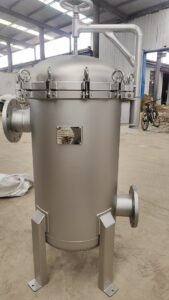
Besta Membrane industrial bag filter for liquid filtration and particle removal in industrial applications.
Quick Answer: When May a Bag Filter Be the Wrong Choice?
A bag filter may need careful review in these cases:
- The process has high temperature or pressure.
- The process needs sub-micron filtration.
- The liquid has high viscosity.
- The liquid is highly corrosive.
- The liquid has a very high solids load.
These conditions do not always rule out bag filtration.
Instead, they are engineering warning signs.
The final choice depends on the full process.
That includes flow rate, temperature, pressure, viscosity, chemistry, solids, and filter life.
Therefore, always review the complete operating condition before choosing a filter.
What Is a Bag Filter Good For?
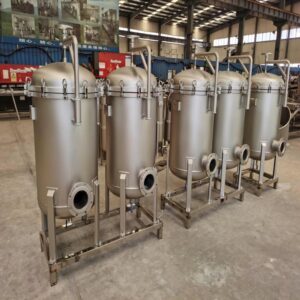
Industrial bag filter for liquid filtration applications
A bag filter works well for many industrial liquid applications.
For example, it can remove suspended solids from process water.
It can also support cooling water filtration.
Likewise, it can support wastewater pretreatment.
Other uses include:
- Industrial water
- Cooling water
- Process water
- Seawater pretreatment
- Chemical liquids
- Coatings
- Paint
- Metalworking fluids
- Food and beverage liquids
- RO pretreatment
Besta Membrane offers industrial bag filter solutions for these types of applications.
The BM-DL series is designed for industrial liquid filtration.
It is used in sectors such as water treatment, chemicals, coatings, and machinery.
Moreover, Besta Membrane offers filter bags in different materials and ratings.
For example, its PE filter bag range covers 0.5 to 500 μm.
The listed maximum temperature is 120°C for that product.
However, these values apply to specific products.
They should not be treated as universal limits.
Therefore, engineers should always check the exact model.
1. High Temperature or High Pressure
High temperature is common in many process industries.
Petrochemical plants may use hot process liquids.
Chemical plants may also need high-temperature filtration.
At the same time, some systems operate under high pressure.
These conditions need careful filter selection.
The filter bag is only one part of the system.
The housing also needs the correct pressure rating.
The basket must also handle the expected load.
Furthermore, seals and gaskets need chemical and thermal stability.
Connections also need the correct design.
Therefore, engineers should check the complete filter assembly.
Do not check the filter bag alone.
Why Can High Temperature Cause Problems?
Many filter bags use polymer materials.
These materials have specific temperature limits.
For example, Besta Membrane lists a maximum temperature of 120°C for its PE filter bag.
However, other filter materials may have different limits.
The housing may also have a different rating.
Likewise, the seal may have another limit.
Therefore, the weakest component can control the system limit.
Temperature cycling can also affect service life.
Repeated heating and cooling may stress seals.
It may also change filter material performance.
As a result, high-temperature service needs a full review.
A Possible Alternative: Sintered Metal Filters
Sintered metal filters can suit some high-temperature applications.
They offer strong mechanical performance.
They can also provide reusable filter media.
Some designs support back-washing or reverse-flow cleaning.
This can reduce filter media replacement.
Therefore, they may suit long-running processes.
They can also suit applications where disposable bags create high waste.
However, the exact material still matters.
Engineers should check temperature, pressure, chemistry, and particle load.
Another Option: Automatic Self-Cleaning Filters
Self-cleaning filters can also help in some applications.
They can reduce manual filter replacement.
They may use brushes, scrapers, or backwash systems.
Therefore, they can support continuous operation.
This option can be useful when downtime is costly.
However, the filter type must match the particle size.
It must also match the solids load.
Key Selection Tip
Do not select a filter by temperature alone.
Check the housing, media, seals, and connections.
Also, check the pressure and differential pressure.
This approach gives a safer design.
2. Sub-Micron Filtration Requirements
Some industries need very fine filtration.
Examples include electronics and fine chemicals.
Pharmaceutical processes may also need fine filtration.
High-purity water systems can need it too.
In these cases, a standard bag filter may not be the best final filter.
The key issue is particle retention.
It is not only the stated micron rating.
Different filters use different rating methods.
For example, a nominal rating is not the same as an absolute rating.
Therefore, engineers should compare test methods.
They should also check the required particle removal level.
When Should You Consider a Cartridge Filter?
Pleated cartridge filters can provide fine filtration.
They also offer a large filter area.
This design can support stable flow.
Besta Membrane offers PTFE pleated filter cartridges.
The listed ratings include 0.1, 0.22, and 0.45 μm.
The listed operating temperature is up to 90°C.
The listed operating pressure is 4.2 bar.
These values apply to the specific product.
Therefore, users should confirm the final operating conditions.
When Should You Consider UF?
Ultrafiltration can provide much finer separation.
It can also help in water treatment.
Besta Membrane offers UF membrane products.
Its range includes PVDF and other membrane solutions.
Therefore, UF can be considered for suitable water treatment needs.
However, UF is not a direct replacement for every bag filter.
The two technologies solve different filtration tasks.
So, engineers should compare the full process.
Key Selection Tip
If your target is below 1 μm, review the process again.
Ask whether you need nominal or absolute filtration.
Then check the particle size distribution.
Finally, compare cartridge and membrane options.
3. High-Viscosity Liquids
High-viscosity liquids behave differently from water.
Examples include oils, resins, coatings, and adhesives.
Some syrups can also have high viscosity.
Lubricants may create similar filtration challenges.
As viscosity rises, pressure loss often rises too.
The filter may then need more pressure.
At the same time, sticky particles may build up on the media.
This can reduce the useful filter area.
Therefore, the filter may load faster.
Why Does Viscosity Matter?
Flow rate alone does not define filter capacity.
Water has low viscosity.
Oil may have much higher viscosity.
Resin can have an even higher viscosity.
Therefore, the same filter may perform very differently.
Temperature also affects viscosity.
For many liquids, higher temperature lowers viscosity.
As a result, operating temperature matters.
Engineers should always state the actual viscosity.
The value should preferably come from the operating temperature.
Can a Bag Filter Still Work?
Yes, in some cases.
A bag filter can work with some viscous liquids.
However, the filter needs enough area.
The filter media also needs to match the liquid.
The system must also control pressure drop.
Therefore, high viscosity is not an automatic ban.
It is a design warning.
Alternative: Centrifugal Separation
Centrifugal separation can help remove dense particles.
It does not depend on disposable filter media.
Therefore, it can reduce the load on a downstream filter.
This can work well with some oils and process liquids.
However, performance depends on particle density.
Small particles may not separate well.
So, the process must be checked first.
Substitute: Magnetic Filtration
Magnetic filtration can help with ferrous particles.
For example, metalworking fluids may contain iron particles.
Lubricants may also contain steel debris.
A magnetic filter can capture these particles.
Therefore, it can reduce disposable filter use.
However, it only works for magnetic contaminants.
It cannot replace normal filtration for every particle type.
Key Selection Tip
Always provide viscosity in cP or mPa·s.
Also, provide the operating temperature.
Then check the target flow rate.
Finally, calculate the expected pressure drop.
4. Highly Corrosive Chemicals
Chemical compatibility is critical in industrial filtration.
Strong acids can attack filter materials.
Strong alkalis can also create material risks.
Some solvents can damage polymer materials.
Therefore, chemical service needs careful material selection.
Typical examples include:
- Sulfuric acid
- Hydrofluoric acid
- Strong sodium hydroxide
- Aggressive solvents
- Strong oxidizing liquids
However, the chemical name alone is not enough.
The concentration also matters.
Temperature also matters.
Exposure time can matter as well.
Therefore, compatibility should cover the full process.
Check the Whole Wetted System
The filter bag is only one component.
The housing also contacts the process liquid.
The basket may also contact the liquid.
Seals and gaskets are also important.
Connections can create another weak point.
Therefore, review every wetted material.
This is especially important for strong chemicals.
PTFE Can Be a Better Choice
PTFE has strong chemical resistance.
It can suit many aggressive chemical applications.
Besta Membrane offers PTFE pleated filter cartridges.
The product uses PTFE filter media.
It also uses PTFE for the core and seal.
The product page lists strong acid and alkali resistance.
It also lists resistance to many solvents.
However, every chemical needs a separate review.
Do not assume that PTFE suits every chemical.
Always check concentration and temperature.
What About Ceramic Membranes?
Ceramic membranes can suit some harsh process conditions.
They offer strong chemical and thermal stability.
However, compatibility still depends on the chemical.
Hydrofluoric acid needs special attention.
Fluoride can attack some ceramic materials.
Therefore, always confirm the material before selection.
Key Selection Tip
Do not ask only:
“Is the filter corrosion resistant?”
Instead, ask:
“Is the full wetted system compatible?”
That question gives a better engineering result.
5. Very High Suspended Solids
Some liquids contain large amounts of solids.
Mining wastewater is one example.
Pulp and paper streams can also carry high solids.
Metallurgical wastewater may have similar loads.
In these cases, a filter bag can load very quickly.
The result can be a rapid pressure increase.
Flow can then fall.
Filter replacement can also become frequent.
Therefore, the bag may become expensive to operate.
Why Is High Solids Loading Expensive?
The filter bag has limited holding capacity.
Once the media loads, pressure rises.
The pump may then need more energy.
Operators may also need to change bags more often.
This creates extra labor.
It also creates more filter waste.
Finally, frequent maintenance can stop production.
Therefore, the purchase price is not the full cost.
Replacement: Self-Cleaning Filters
Automatic self-cleaning filters can reduce manual work.
They can clean the filter surface during operation.
Different systems use different cleaning methods.
These include:
- Scrapers
- Brushes
- Backwashing
- Automatic screen cleaning
Therefore, they can suit continuous process lines.
However, the filter must match the solids.
Particle size also matters.
Particle shape can matter too.
Sticky solids need another design.
Alternative: Hydrocyclone or Centrifugal Separation
A hydrocyclone can remove some coarse solids first.
This can reduce the load on the final filter.
The same principle applies to centrifugal separation.
Therefore, a multi-stage system can work better.
A typical process may look like this:
Coarse separation → self-cleaning filtration → fine filtration
This design can reduce filter consumption.
It can also improve overall process stability.
Bag Filter vs. Other Filtration Technologies
The following table provides a simple starting point.
| Process condition | Bag filter | Possible alternative | Main reason |
|---|---|---|---|
| Normal industrial water | Good choice | Cartridge filter | Depends on accuracy |
| Moderate solids | Good choice | Cartridge filter | Depends on particle load |
| High temperature | Review first | Sintered metal filter | Better thermal strength |
| High pressure | Review first | Engineered metal system | Better mechanical strength |
| Sub-micron filtration | Often not ideal | Cartridge or membrane | Better fine-particle control |
| High viscosity | Application dependent | Centrifugal or magnetic | Lower media load |
| Strong chemicals | Material dependent | PTFE or ceramic | Better chemical resistance |
| High solids | Often costly | Self-cleaning filter | Less manual replacement |
| RO pretreatment | Common choice | Cartridge or UF | Depends on feed quality |
| Final fine filtration | Often not ideal | Cartridge or membrane | Better particle control |
This table is only a screening guide.
The final choice needs process data.
How to Select the Right Bag Filter
A good filter selection starts with process data.
Therefore, collect the following information first.
1. Flow Rate
Start with the real process flow.
Do not use water flow alone.
Water tests often use low viscosity.
Your process liquid may behave differently.
Therefore, give the actual flow rate.
2. Filtration Rating
Define the target particle size.
Then define the required removal level.
Also, check if the rating is nominal or absolute.
This step can prevent many selection errors.
3. Temperature
Give the normal temperature.
Also, give the maximum temperature.
Then check temperature cycling.
This is important for both media and seals.
4. Pressure
Give the normal pressure.
Also, give the maximum pressure.
Then check the maximum differential pressure.
Pressure spikes should also be considered.
5. Chemical Compatibility
Name the process liquid.
Then give the concentration.
Also, give the operating temperature.
This data supports better material selection.
6. Viscosity
Give viscosity in cP or mPa·s.
Also, state the test temperature.
This helps estimate pressure loss.
It also helps size the filter area.
7. Suspended Solids
Give the TSS level.
Then give the particle size.
Also, describe the particle type.
Sticky particles need special attention.
8. Maintenance Needs
Ask how often the system can stop.
Then define the acceptable maintenance time.
Also, decide if automatic cleaning is needed.
This step can change the entire filter choice.
Initial Cost vs. Total Cost
A cheap filter is not always the cheapest system.
This is especially true when the filter loads fast.
For example, frequent bag replacement adds labor cost.
It also adds waste disposal cost.
Pump energy can increase with pressure drop.
Production can also suffer from downtime.
Therefore, total cost matters more than purchase price.
This is called Total Cost of Ownership, or TCO.
TCO can include:
- Equipment cost
- Filter bag cost
- Labor
- Disposal
- Pump energy
- Maintenance
- Downtime
- Production losses
Therefore, compare the full operating cost.
Do not compare equipment price alone.
Why Choose Besta Membrane?
Besta Membrane focuses on filtration technology.
The company provides products for different filtration needs.
Its product range includes:
- Industrial bag filters
- Filter bags
- Cartridge filters
- UF membranes
- RO membranes
- MBR membranes
- Water treatment systems
Besta Membrane also offers the BM-DL bag filter series.
The series supports industrial liquid filtration.
It uses stainless steel options such as 304 and 316L.
Duplex 2205 options are also available.
The company also supports customized designs.
Therefore, Besta Membrane can support more than one filter type.
This is useful when the process needs a different solution.
A bag filter may be the right answer.
However, a cartridge or membrane may be better.
The goal is to match the technology to the process.
Bag Filter Selection Checklist
Before ordering a bag filter, ask these eight questions:
1. What is the actual flow rate?

2. What particle size must be removed?

3. Is the rating nominal or absolute?

4. What are the normal and peak temperatures?

5. What are the pressure and differential pressure?

6. What is the liquid viscosity?

7. What chemicals are present?

8. What is the suspended solids level?
If these answers are unclear, stop before ordering.
First, collect the process data.
Then, select the filtration technology.
Finally, select the filter model.
Final Conclusion
Bag filters remain a useful industrial filtration solution.
They offer simple operation.
They can also provide good value.
However, the best choice depends on the process.
High temperature needs careful review.
High pressure also needs careful review.
Sub-micron filtration may need cartridges or membranes.
High viscosity may need special filter design.
Strong chemicals need full material checks.
High solids may need self-cleaning filtration.
Therefore, do not choose a filter by price alone.
Instead, compare performance and total operating cost.
At Besta Membrane, we help customers review these factors.
We can evaluate flow, pressure, temperature, viscosity, chemistry, and solids.
Then, we can suggest a suitable filtration approach.
The right filter is not always the cheapest filter.
Instead, it is the filter that fits the process.
Besta Membrane — filtration solutions based on real process needs.
Frequently Asked Questions
What is a bag filter used for?
A bag filter removes suspended particles from liquids.
It is common in industrial water treatment.
It also works in process and pretreatment systems.
When should I consider another filter?
Consider another technology when conditions become demanding.
Examples include very fine filtration and high solids.
High viscosity and strong chemicals also need review.
High temperature can also require another design.
Is a bag filter better than a cartridge filter?
Neither option is always better.
Bag filters can suit higher solids loads.
Cartridge filters can suit finer filtration.
Therefore, the process should guide the choice.
Can bag filters handle high-viscosity liquids?
Yes, some can.
However, viscosity can increase pressure loss.
It can also shorten filter life.
Therefore, test the actual liquid before final selection.
What can replace a bag filter?
Several options exist.
These include cartridge filters and self-cleaning filters.
Centrifugal separators can also help.
PTFE filters and UF membranes can suit other cases.
The right option depends on the process.
How do I choose a bag filter?
Start with process data.
Check flow, temperature, pressure, and viscosity.
Then check chemistry and solids.
Finally, define the required filtration rating.
This method gives a more reliable result.
About Besta Membrane
Besta Membrane is a filtration technology company.
The company provides filtration products and solutions.
Its product range covers industrial filtration and water treatment.
These solutions serve many industrial applications.
For bag filtration, Besta Membrane offers the BM-DL series.
The company also provides filter bags and cartridge filters.
In addition, it supplies UF, RO, and MBR membrane products.
Therefore, customers can compare several filtration technologies.
This helps create a more suitable process solution.
