
 info@best-filtration.com
 Membrana MBR
 Membrana de ósmosis inversa
 Membrana RO residencial
 Membrana UF
 Planta de tratamiento de agua
 Máquina residencial RO
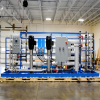 Sistema RO salobre
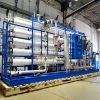 Sistema de agua de mar/planta SW ro
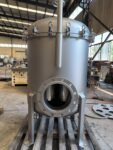 Filtro de bolsa
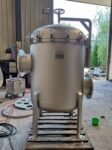 Filtro de cartucho
 Sistema de filtración de agua comercial
 Sistema de limpieza de membrana(Titubear)
 Accesorios de consumo


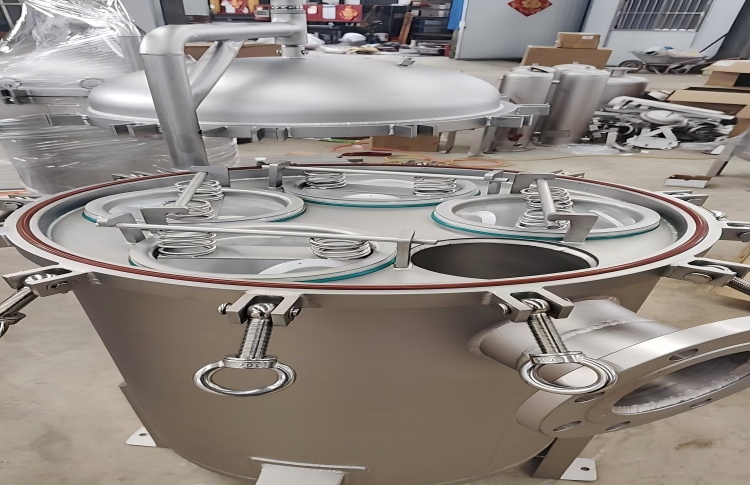
Una práctica guía de selección de filtros de bolsa según la temperatura, presión, viscosidad, corrosión, y sólidos
Los filtros de bolsas son comunes en la filtración de líquidos industriales..
son simples, práctico, y rentable.
También, pueden manejar muchas tareas comunes de filtración de líquidos.
Sin embargo, Un filtro de bolsa no es una solución universal..
Algunas condiciones del proceso necesitan más cuidado..
Por ejemplo, Las altas temperaturas pueden limitar la vida útil del medio filtrante..
Asimismo, La alta viscosidad puede aumentar la pérdida de presión..
Las partículas muy finas también pueden necesitar un diseño de filtro diferente..
Además, Los productos químicos fuertes pueden crear riesgos materiales..
Finalmente, Los sólidos altos pueden causar una carga rápida del filtro..
Por lo tanto, La selección del filtro debe comenzar con el proceso..
No debería comenzar con el precio de compra más bajo..
En Besta membrana, Suministramos productos de filtración industrial para muchas necesidades de procesos..
Nuestra gama incluye filtros de bolsas, bolsas de filtro, filtros de cartucho, membranas UF, y otras soluciones de filtración.
Nuestra serie de filtros de bolsa BM-DL admite muchas aplicaciones de filtración de líquidos industriales.
Sin embargo, También creemos en elegir la tecnología adecuada..
Entonces, Esta guía explica cinco condiciones que necesitan atención adicional..
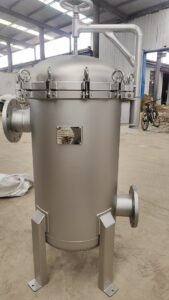
Filtro de bolsa industrial de membrana Besta para filtración de líquidos y eliminación de partículas en aplicaciones industriales.
Respuesta rápida: ¿Cuándo puede ser que un filtro de bolsa sea la elección equivocada??
Es posible que un filtro de bolsa necesite una revisión cuidadosa en estos casos.:
- El proceso tiene alta temperatura o presión..
- El proceso necesita filtración submicrónica..
- El líquido tiene alta viscosidad..
- El líquido es muy corrosivo..
- El líquido tiene una carga de sólidos muy alta..
Estas condiciones no siempre descartan la filtración con bolsas..
En cambio, son señales de advertencia de ingeniería.
La elección final depende del proceso completo..
Eso incluye el caudal., temperatura, presión, viscosidad, química, sólidos, y vida del filtro.
Por lo tanto, Siempre revise las condiciones de funcionamiento completas antes de elegir un filtro..
¿Para qué sirve un filtro de bolsa??
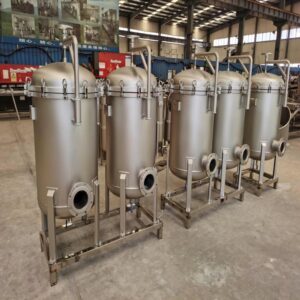
Filtro de bolsa industrial para aplicaciones de filtración de líquidos.
Un filtro de bolsa funciona bien para muchas aplicaciones de líquidos industriales.
Por ejemplo, Puede eliminar sólidos suspendidos del agua de proceso..
También puede soportar la filtración de agua de refrigeración..
Asimismo, Puede soportar el pretratamiento de aguas residuales..
Otros usos incluyen:
- agua industrial
- agua de refrigeración
- Agua de proceso
- Pretratamiento de agua de mar
- Líquidos químicos
- Recubrimientos
- Pintar
- Fluidos para trabajar metales
- Líquidos de alimentos y bebidas.
- pretratamiento RO
Besta Membrane ofrece soluciones de filtros de mangas industriales para este tipo de aplicaciones.
La serie BM-DL está diseñada para la filtración de líquidos industriales..
Se utiliza en sectores como el tratamiento de aguas., químicos, revestimiento, y maquinaria.
Además, Besta Membrane ofrece bolsas filtrantes en diferentes materiales y clasificaciones..
Por ejemplo, Su gama de bolsas filtrantes de PE cubre 0.5 a 500 μm.
La temperatura máxima indicada es de 120 °C para ese producto..
Sin embargo, Estos valores se aplican a productos específicos..
No deben ser tratados como límites universales..
Por lo tanto, Los ingenieros siempre deben comprobar el modelo exacto..
1. Alta temperatura o alta presión
Las altas temperaturas son comunes en muchas industrias de procesos..
Las plantas petroquímicas pueden utilizar líquidos de proceso calientes.
Las plantas químicas también pueden necesitar filtración a alta temperatura.
Al mismo tiempo, Algunos sistemas funcionan bajo alta presión..
Estas condiciones necesitan una cuidadosa selección de filtros..
La bolsa de filtro es sólo una parte del sistema..
La carcasa también necesita la presión nominal correcta..
La cesta también debe soportar la carga esperada..
Además, Los sellos y juntas necesitan estabilidad química y térmica..
Las conexiones también necesitan el diseño correcto..
Por lo tanto, Los ingenieros deben verificar el conjunto completo del filtro..
No revises la bolsa del filtro solo.
¿Por qué las altas temperaturas pueden causar problemas??
Muchas bolsas de filtro utilizan materiales poliméricos..
Estos materiales tienen límites de temperatura específicos..
Por ejemplo, Besta Membrane enumera una temperatura máxima de 120°C para su bolsa filtrante de PE.
Sin embargo, Otros materiales filtrantes pueden tener límites diferentes..
La vivienda también puede tener una calificación diferente..
Asimismo, el sello puede tener otro límite.
Por lo tanto, El componente más débil puede controlar el límite del sistema..
Los ciclos de temperatura también pueden afectar la vida útil.
El calentamiento y enfriamiento repetidos pueden estresar los sellos..
También puede cambiar el rendimiento del material del filtro..
Como resultado, El servicio de alta temperatura necesita una revisión completa..
Una posible alternativa: Filtros de metal sinterizado
Los filtros de metal sinterizado pueden adaptarse a algunas aplicaciones de alta temperatura.
Ofrecen un fuerte rendimiento mecánico..
También pueden proporcionar medios filtrantes reutilizables..
Algunos diseños admiten retrolavado o limpieza de flujo inverso..
Esto puede reducir el reemplazo del medio filtrante..
Por lo tanto, pueden adaptarse a procesos de larga duración.
También pueden adaptarse a aplicaciones donde las bolsas desechables generan una gran cantidad de residuos..
Sin embargo, el material exacto sigue siendo importante.
Los ingenieros deben comprobar la temperatura., presión, química, y carga de partículas.
Otra opción: Filtros Autolimpiantes Automáticos
Los filtros autolimpiantes también pueden ayudar en algunas aplicaciones..
Pueden reducir el reemplazo manual del filtro..
Pueden usar cepillos, raspadores, o sistemas de retrolavado.
Por lo tanto, pueden soportar el funcionamiento continuo.
Esta opción puede resultar útil cuando el tiempo de inactividad es costoso.
Sin embargo, el tipo de filtro debe coincidir con el tamaño de las partículas.
También debe coincidir con la carga de sólidos..
Consejo para la selección de claves
No seleccione un filtro solo por temperatura.
comprobar la vivienda, medios de comunicación, sellos, y conexiones.
También, comprobar la presión y la presión diferencial.
Este enfoque proporciona un diseño más seguro..
2. Requisitos de filtración submicrónica
Algunas industrias necesitan una filtración muy fina.
Los ejemplos incluyen electrónica y química fina..
Los procesos farmacéuticos también pueden necesitar una filtración fina.
Los sistemas de agua de alta pureza también pueden necesitarla.
En estos casos, un filtro de bolsa estándar puede no ser el mejor filtro final.
La cuestión clave es la retención de partículas..
No es sólo la clasificación en micrones indicada.
Diferentes filtros utilizan diferentes métodos de calificación.
Por ejemplo, Una calificación nominal no es lo mismo que una calificación absoluta..
Por lo tanto, Los ingenieros deben comparar los métodos de prueba..
También deben verificar el nivel de eliminación de partículas requerido..
¿Cuándo debería considerar un filtro de cartucho??
Los filtros de cartucho plisados pueden proporcionar una filtración fina.
También ofrecen una gran área de filtrado..
Este diseño puede soportar un flujo estable..
Besta Membrane ofrece cartuchos filtrantes plisados de PTFE.
Las calificaciones enumeradas incluyen 0.1, 0.22, y 0.45 μm.
La temperatura de funcionamiento indicada es de hasta 90 °C..
La presión de funcionamiento indicada es 4.2 bar.
Estos valores se aplican al producto específico..
Por lo tanto, Los usuarios deben confirmar las condiciones finales de funcionamiento..
¿Cuándo debería considerar la UF??
La ultrafiltración puede proporcionar una separación mucho más fina.
También puede ayudar en el tratamiento del agua..
Besta Membrane ofrece productos de membrana UF.
Su gama incluye PVDF y otras soluciones de membranas..
Por lo tanto, Se puede considerar la UF para necesidades adecuadas de tratamiento de agua..
Sin embargo, UF no es un reemplazo directo para todos los filtros de bolsa.
Las dos tecnologías resuelven diferentes tareas de filtración..
Entonces, Los ingenieros deben comparar el proceso completo..
Consejo para la selección de claves
Si tu objetivo está por debajo 1 μm, revisar el proceso nuevamente.
Pregunta si necesitas filtración nominal o absoluta.
Luego verifique la distribución del tamaño de las partículas..
Finalmente, comparar opciones de cartuchos y membranas.
3. Líquidos de alta viscosidad
Los líquidos de alta viscosidad se comportan de manera diferente al agua.
Los ejemplos incluyen aceites, resinas, revestimiento, y adhesivos.
Algunos jarabes también pueden tener una alta viscosidad..
Los lubricantes pueden crear desafíos de filtración similares.
A medida que aumenta la viscosidad, La pérdida de presión a menudo también aumenta..
Es posible que el filtro necesite más presión..
Al mismo tiempo, Se pueden acumular partículas pegajosas en el medio..
Esto puede reducir el área útil del filtro..
Por lo tanto, el filtro puede cargarse más rápido.
¿Por qué es importante la viscosidad??
El caudal por sí solo no define la capacidad del filtro.
El agua tiene baja viscosidad..
El aceite puede tener una viscosidad mucho mayor..
La resina puede tener una viscosidad aún mayor..
Por lo tanto, el mismo filtro puede funcionar de manera muy diferente.
La temperatura también afecta la viscosidad..
Para muchos líquidos, Una temperatura más alta reduce la viscosidad..
Como resultado, La temperatura de funcionamiento importa.
Los ingenieros siempre deben indicar la viscosidad real..
El valor debería provenir preferentemente de la temperatura de funcionamiento..
¿Puede seguir funcionando un filtro de bolsa??
Sí, en algunos casos.
Un filtro de bolsa puede funcionar con algunos líquidos viscosos..
Sin embargo, el filtro necesita suficiente área.
El medio filtrante también debe coincidir con el líquido..
El sistema también debe controlar la caída de presión..
Por lo tanto, la alta viscosidad no es una prohibición automática.
Es una advertencia de diseño..
Alternativa: Separación centrífuga
La separación centrífuga puede ayudar a eliminar partículas densas.
No depende de medios filtrantes desechables..
Por lo tanto, Puede reducir la carga en un filtro aguas abajo..
Esto puede funcionar bien con algunos aceites y líquidos de proceso..
Sin embargo, El rendimiento depende de la densidad de las partículas..
Es posible que las partículas pequeñas no se separen bien.
Entonces, el proceso debe ser verificado primero.
Sustituto: Filtración magnética
La filtración magnética puede ayudar con las partículas ferrosas.
Por ejemplo, Los fluidos para trabajar metales pueden contener partículas de hierro..
Los lubricantes también pueden contener restos de acero..
Un filtro magnético puede capturar estas partículas.
Por lo tanto, puede reducir el uso de filtros desechables.
Sin embargo, solo funciona para contaminantes magnéticos.
No puede reemplazar la filtración normal para cada tipo de partículas..
Consejo para la selección de claves
Proporcionar siempre la viscosidad en cP o mPa·s.
También, proporcionar la temperatura de funcionamiento.
Luego verifique el caudal objetivo.
Finalmente, calcular la caída de presión esperada.
4. Productos químicos altamente corrosivos
La compatibilidad química es fundamental en la filtración industrial.
Los ácidos fuertes pueden atacar los materiales filtrantes..
Los álcalis fuertes también pueden crear riesgos materiales.
Algunos disolventes pueden dañar los materiales poliméricos..
Por lo tanto, El servicio químico necesita una cuidadosa selección de materiales..
Los ejemplos típicos incluyen:
- Ácido sulfúrico
- ácido fluorhídrico
- Hidróxido de sodio fuerte
- Disolventes agresivos
- Líquidos oxidantes fuertes
Sin embargo, el nombre químico por sí solo no es suficiente.
La concentración también importa.
La temperatura también importa.
El tiempo de exposición también puede importar.
Por lo tanto, la compatibilidad debe cubrir todo el proceso.
Verifique todo el sistema húmedo
La bolsa de filtro es sólo un componente..
La carcasa también hace contacto con el líquido del proceso..
La cesta también puede entrar en contacto con el líquido..
Los sellos y juntas también son importantes.
Las conexiones pueden crear otro punto débil.
Por lo tanto, revisar cada material mojado.
Esto es especialmente importante para productos químicos fuertes..
El PTFE puede ser una mejor opción
El PTFE tiene una fuerte resistencia química.
Puede adaptarse a muchas aplicaciones químicas agresivas..
Besta Membrane ofrece cartuchos filtrantes plisados de PTFE.
El producto utiliza medios filtrantes de PTFE..
También utiliza PTFE para el núcleo y el sello..
La página del producto enumera una fuerte resistencia a ácidos y álcalis..
También enumera la resistencia a muchos disolventes..
Sin embargo, cada producto químico necesita una revisión por separado.
No asuma que el PTFE se adapta a todos los productos químicos.
Siempre verifique la concentración y la temperatura..
¿Qué pasa con las membranas cerámicas??
Las membranas cerámicas pueden adaptarse a algunas condiciones de proceso adversas.
Ofrecen una fuerte estabilidad química y térmica..
Sin embargo, La compatibilidad aún depende del producto químico..
El ácido fluorhídrico necesita atención especial..
El fluoruro puede atacar algunos materiales cerámicos..
Por lo tanto, Confirme siempre el material antes de la selección..
Consejo para la selección de claves
No preguntes solo:
«¿El filtro es resistente a la corrosión??»
En cambio, preguntar:
«¿Es compatible el sistema totalmente húmedo??»
Esa pregunta da un mejor resultado de ingeniería..
5. Sólidos suspendidos muy altos
Algunos líquidos contienen grandes cantidades de sólidos..
Las aguas residuales de la minería son un ejemplo.
Los flujos de pulpa y papel también pueden transportar un alto contenido de sólidos..
Las aguas residuales metalúrgicas pueden tener cargas similares.
En estos casos, una bolsa de filtro puede cargarse muy rápidamente.
El resultado puede ser un rápido aumento de la presión..
Entonces el flujo puede caer.
El reemplazo del filtro también puede volverse frecuente.
Por lo tanto, la bolsa puede resultar costosa de operar.
¿Por qué es costosa la carga con alto contenido de sólidos??
La bolsa de filtro tiene una capacidad de retención limitada..
Una vez que se carga el medio, la presión aumenta.
Es posible que la bomba necesite más energía..
Es posible que los operadores también necesiten cambiar las bolsas con más frecuencia..
Esto crea trabajo extra.
También genera más residuos de filtro..
Finalmente, El mantenimiento frecuente puede detener la producción..
Por lo tanto, el precio de compra no es el costo total.
Reemplazo: Filtros autolimpiantes
Los filtros automáticos de autolimpieza pueden reducir el trabajo manual.
Pueden limpiar la superficie del filtro durante el funcionamiento..
Diferentes sistemas utilizan diferentes métodos de limpieza..
Estos incluyen:
- Rascadores
- Pinceles
- Retroceso
- Limpieza automática de pantalla
Por lo tanto, Pueden adaptarse a líneas de proceso continuo..
Sin embargo, el filtro debe coincidir con los sólidos.
El tamaño de las partículas también importa.
La forma de las partículas también puede importar.
Los sólidos pegajosos necesitan otro diseño.
Alternativa: Separación por hidrociclón o centrífuga
Un hidrociclón puede eliminar primero algunos sólidos gruesos.
Esto puede reducir la carga en el filtro final..
El mismo principio se aplica a la separación centrífuga..
Por lo tanto, un sistema de múltiples etapas puede funcionar mejor.
Un proceso típico puede verse así:
Separación gruesa → filtración autolimpiante → filtración fina
Este diseño puede reducir el consumo de filtro..
También puede mejorar la estabilidad general del proceso..
Filtro de bolsa vs.. Otras tecnologías de filtración
La siguiente tabla proporciona un punto de partida sencillo..
| Condición del proceso | Filtro de bolsa | Posible alternativa | Razón principal |
|---|---|---|---|
| Agua industrial normal | buena eleccion | Filtro de cartucho | Depende de la precisión |
| Sólidos moderados | buena eleccion | Filtro de cartucho | Depende de la carga de partículas |
| Temperatura alta | Revisar primero | Filtro de metal sinterizado | Mejor resistencia térmica |
| Presión alta | Revisar primero | Sistema metálico diseñado | Mejor resistencia mecánica |
| Filtración submicrónica | A menudo no es ideal | Cartucho o membrana | Mejor control de partículas finas |
| Alta viscosidad | Dependiente de la aplicación | Centrífugo o magnético | Menor carga de medios |
| químicos fuertes | Dependiente del material | PTFE o cerámica | Mejor resistencia química |
| Altos sólidos | A menudo costoso | Filtro autolimpiante | Menos reemplazo manual |
| pretratamiento RO | elección común | Cartucho o UF | Depende de la calidad del alimento |
| Filtración fina final | A menudo no es ideal | Cartucho o membrana | Mejor control de partículas |
Esta tabla es sólo una guía de detección..
La elección final necesita datos de proceso..
Cómo seleccionar el filtro de bolsa adecuado
Una buena selección de filtros comienza con los datos del proceso.
Por lo tanto, primero recopile la siguiente información.
1. Caudal
Comience con el flujo de proceso real.
No utilice el flujo de agua solo.
Las pruebas de agua a menudo utilizan baja viscosidad..
Su líquido de proceso puede comportarse de manera diferente.
Por lo tanto, dar el caudal real.
2. Clasificación de filtración
Definir el tamaño de partícula objetivo.
Luego defina el nivel de eliminación requerido.
También, comprobar si la calificación es nominal o absoluta.
Este paso puede evitar muchos errores de selección..
3. Temperatura
Dar la temperatura normal.
También, dar la temperatura máxima.
Luego verifique el ciclo de temperatura..
Esto es importante tanto para los medios como para los sellos..
4. Presión
Dar la presión normal.
También, dar la máxima presión.
Luego verifique la presión diferencial máxima..
También se deben considerar los picos de presión..
5. Compatibilidad química
Nombra el líquido del proceso..
Luego da la concentracion.
También, dar la temperatura de funcionamiento.
Estos datos respaldan una mejor selección de materiales..
6. Viscosidad
Dar viscosidad en cP o mPa·s.
También, indicar la temperatura de prueba.
Esto ayuda a estimar la pérdida de presión..
También ayuda a dimensionar el área del filtro..
7. Sólidos suspendidos
Dar el nivel TSS.
Luego da el tamaño de partícula.
También, describir el tipo de partícula.
Las partículas pegajosas necesitan atención especial.
8. Necesidades de mantenimiento
Pregunte con qué frecuencia puede detenerse el sistema..
Luego defina el tiempo de mantenimiento aceptable..
También, decidir si es necesaria una limpieza automática.
Este paso puede cambiar toda la opción de filtro..
Costo inicial versus. Costo total
Un filtro barato no siempre es el sistema más barato.
Esto es especialmente cierto cuando el filtro se carga rápidamente..
Por ejemplo, El reemplazo frecuente de bolsas aumenta el costo de mano de obra..
También agrega el costo de eliminación de residuos..
La energía de la bomba puede aumentar con la caída de presión..
La producción también puede verse afectada por tiempos de inactividad.
Por lo tanto, El costo total importa más que el precio de compra..
esto se llama Costo total de propiedad, o costo total de propiedad.
El coste total de propiedad puede incluir:
- Costo del equipo
- Costo de la bolsa de filtro
- Mano de obra
- Desecho
- Energía de la bomba
- Mantenimiento
- Falta del tiempo
- Pérdidas de producción
Por lo tanto, comparar el costo operativo total.
No compare solo el precio del equipo.
¿Por qué elegir la membrana Besta??
Besta Membrane se centra en la tecnología de filtración.
La empresa ofrece productos para diferentes necesidades de filtración..
Su gama de productos incluye:
- Filtros de bolsa industriales
- Bolsas de filtro
- Filtros de cartucho
- membranas UF
- Membranas RO
- Membranas MBR
- Sistemas de tratamiento de agua.
Besta Membrane también ofrece la serie de filtros de bolsa BM-DL.
La serie admite la filtración de líquidos industriales..
Utiliza opciones de acero inoxidable como 304 y 316L.
Dúplex 2205 opciones también están disponibles.
La empresa también admite diseños personalizados..
Por lo tanto, Besta Membrane puede admitir más de un tipo de filtro.
Esto es útil cuando el proceso necesita una solución diferente..
Un filtro de bolsa puede ser la respuesta correcta.
Sin embargo, un cartucho o membrana puede ser mejor.
El objetivo es adaptar la tecnología al proceso..
Lista de verificación de selección de filtros de bolsa
Antes de pedir un filtro de bolsa, haz estas ocho preguntas:
1. ¿Cuál es el caudal real??

2. ¿Qué tamaño de partícula se debe eliminar??

3. ¿La calificación es nominal o absoluta??

4. ¿Cuáles son las temperaturas normales y máximas??

5. ¿Cuáles son la presión y la presión diferencial??

6. ¿Cuál es la viscosidad del líquido??

7. ¿Qué químicos están presentes??

8. ¿Cuál es el nivel de sólidos en suspensión??
Si estas respuestas no están claras, detenerse antes de ordenar.
Primero, recoger los datos del proceso.
Entonces, seleccione la tecnología de filtración.
Finalmente, seleccione el modelo de filtro.
Conclusión final
Los filtros de bolsa siguen siendo una solución de filtración industrial útil.
Ofrecen un funcionamiento sencillo.
También pueden ofrecer una buena relación calidad-precio..
Sin embargo, la mejor elección depende del proceso.
La alta temperatura necesita una revisión cuidadosa.
La alta presión también necesita una revisión cuidadosa.
La filtración submicrónica puede necesitar cartuchos o membranas..
La alta viscosidad puede necesitar un diseño de filtro especial.
Los productos químicos fuertes necesitan controles completos del material.
Los sólidos altos pueden necesitar filtración autolimpiante.
Por lo tanto, no elijas un filtro solo por precio.
En cambio, comparar el rendimiento y el costo operativo total.
En la membrana Besta, Ayudamos a los clientes a revisar estos factores..
Podemos evaluar el flujo., presión, temperatura, viscosidad, química, y sólidos.
Entonces, Podemos sugerir un enfoque de filtración adecuado..
El filtro adecuado no siempre es el más barato.
En cambio, es el filtro que se adapta al proceso.
Besta Membrane: soluciones de filtración basadas en necesidades reales de proceso.
Preguntas frecuentes
¿Para qué se utiliza un filtro de bolsa??
Un filtro de bolsas elimina las partículas en suspensión de los líquidos.
Es común en el tratamiento de aguas industriales..
También funciona en sistemas de proceso y pretratamiento..
¿Cuándo debería considerar otro filtro??
Considere otra tecnología cuando las condiciones se vuelvan exigentes.
Los ejemplos incluyen filtración muy fina y alto contenido de sólidos..
La alta viscosidad y los productos químicos fuertes también necesitan revisión.
Las altas temperaturas también pueden requerir otro diseño..
¿Es mejor un filtro de bolsa que un filtro de cartucho??
Ninguna opción es siempre mejor.
Los filtros de bolsa pueden adaptarse a mayores cargas de sólidos.
Los filtros de cartucho pueden adaptarse a una filtración más fina.
Por lo tanto, el proceso debe guiar la elección.
Los filtros de bolsa pueden manejar líquidos de alta viscosidad?
Sí, algunos pueden.
Sin embargo, La viscosidad puede aumentar la pérdida de presión..
También puede acortar la vida útil del filtro..
Por lo tanto, Pruebe el líquido real antes de la selección final..
¿Qué puede reemplazar un filtro de bolsa??
Existen varias opciones.
Estos incluyen filtros de cartucho y filtros autolimpiantes..
Los separadores centrífugos también pueden ayudar.
Los filtros de PTFE y las membranas UF pueden adaptarse a otros casos..
La opción correcta depende del proceso..
¿Cómo elijo un filtro de bolsa??
Comience con los datos del proceso.
Comprobar flujo, temperatura, presión, y viscosidad.
Luego verifique la química y los sólidos..
Finalmente, definir el grado de filtración requerido.
Este método da un resultado más confiable..
Acerca de la membrana Besta
Besta membrana es una empresa de tecnología de filtración.
La empresa ofrece productos y soluciones de filtración..
Su gama de productos abarca la filtración industrial y el tratamiento de aguas..
Estas soluciones sirven para muchas aplicaciones industriales..
Para filtración de bolsas, Besta Membrane ofrece la serie BM-DL.
La empresa también ofrece filtros de mangas y de cartucho..
Además, suministra UF, RO, y productos de membrana MBR.
Por lo tanto, Los clientes pueden comparar varias tecnologías de filtración..
Esto ayuda a crear una solución de proceso más adecuada..
