
 info@best-filtration.com
 MBR Membrane
 Reverse Osmosis Membrane
 Residential Ro Membrane
 UF Membrane
 Water Treatment Plant
 Residential Ro Machine
 Brackish Ro System
 Sea water system/SW RO plant
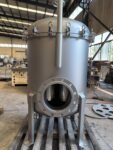 Bag Filter
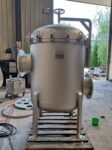 Cartridge Filter
 Commercial Water Filtration System
 Membrane Cleaning System(CIP)
 Consumables Accessories


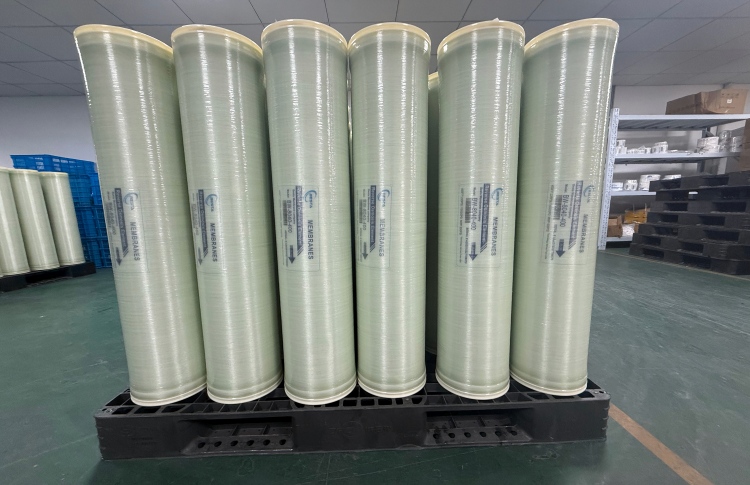
Introduction: Can Chinese RO Membrane Really Replace Imported Brands?
Can Chinese-made reverse osmosis (RO) membrane replace established international brands such as DuPont FilmTec, Toray and Hydranautics?
This is one of the most important questions facing industrial water treatment buyers today.
Five years ago, many buyers preferred imported membranes because they trusted established international brands. However, China’s RO membrane manufacturing industry has changed significantly.
Today, several Chinese manufacturers offer membrane elements with competitive specifications, advanced manufacturing processes and increasingly diverse product ranges.
So, can Chinese RO membrane replace imported brands?
Yes, in many standard industrial and commercial applications, qualified Chinese RO membranes can serve as practical alternatives to imported products. However, replacement depends on the specific model, operating conditions and performance requirements.
In other words, buyers should compare individual membrane models rather than entire brands.
This article examines the differences between Chinese RO membranes and three major international brands: DuPont, Toray and Hydranautics. It also introduces Besta Membrane’s product options and explains when customers can consider switching from imported membranes to Chinese alternatives.
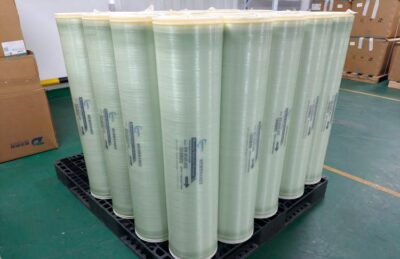
1. Why Are More Buyers Considering Chinese RO Membranes?
Price is one important reason. However, it is not the only reason.
Over the past several years, Chinese manufacturers have improved membrane sheet production, coating processes, quality control and element assembly.
As a result, some Chinese RO membranes now offer competitive nominal salt rejection and permeate flow rates.
Furthermore, domestic suppliers often provide shorter procurement cycles for standard models. They may also offer more flexible technical communication and replacement support.
For international buyers, these advantages can reduce procurement pressure and improve project flexibility.
Nevertheless, a lower purchase price does not automatically mean a lower operating cost. Buyers should also consider energy consumption, cleaning frequency, membrane lifetime and replacement costs.
Therefore, the real question is not simply whether Chinese membranes cost less. Instead, buyers should ask whether a Chinese membrane can deliver the required water quality and operating performance at a competitive total cost.
2. Can Chinese RO Membrane Replace DuPont FilmTec?
DuPont FilmTec has a strong reputation in industrial reverse osmosis and seawater desalination.
Its product portfolio includes seawater RO membranes, brackish water RO membranes and specialized fouling-resistant products.
For example, the FilmTec SW30HRLE-440 is a seawater RO membrane with a published active area of 440 ft². Its published product data lists a permeate flow of approximately 8,000 GPD and stabilized salt rejection of 99.80%.
DuPont specifies its standard seawater test conditions as 32,000 ppm NaCl, 5 ppm boron, 800 psi pressure, 25°C, pH 8 and 8% recovery.
These figures provide a useful reference for evaluating alternative products.
Besta’s alternative: BMSW-8040-440-HF
Besta Membrane offers the BMSW-8040-440-HF for seawater RO applications.
According to Besta’s published product specifications, this model offers:
- Active membrane area: 440 ft² (41.0 m²)
- Average permeate flow: 9,900 GPD (37.5 m³/day)
- Stable salt rejection: 99.80%
- Minimum salt rejection: 99.60%
- Boron removal: 91%
The model targets high-flux seawater desalination applications.
Therefore, it provides a potential alternative for projects that prioritize seawater production capacity and competitive membrane procurement costs.
However, buyers should not assume that the two products are automatically interchangeable. They should compare the latest technical datasheets, test conditions, feed spacer thickness, operating limits and system design.
In particular, engineers should verify the expected permeate quality and energy consumption through system projections before replacing an existing FilmTec element.
Besta product: BMSW-8040-440-HF
Reference: DuPont FilmTec SW30HRLE-440 Technical Datasheet
3. Can Chinese RO Membrane Replace Toray?
Toray is another established manufacturer in the global RO membrane industry.
Its seawater RO product portfolio includes several high-rejection membrane elements.
For example, the Toray TM820K series targets high-rejection seawater desalination applications.
According to Toray’s published product datasheet, the TM820K-400 offers:
- Active membrane area: 400 ft² (37 m²)
- Product flow rate: 5,800 GPD (21.9 m³/day)
- Nominal salt rejection: 99.86%
- Minimum salt rejection: 99.50%
Meanwhile, the TM820K-440 offers 6,400 GPD (24.2 m³/day) with the same nominal salt rejection.
These specifications make the TM820K series an important reference when buyers evaluate high-rejection seawater RO membranes.
Besta’s alternative: BMSW-8040-400-HR
Besta offers the BMSW-8040-400-HR for high-rejection seawater RO applications.
Its published specifications include:
- Active membrane area: 400 ft² (37.2 m²)
- Average permeate flow: 6,000 GPD (22.8 m³/day)
- Stable salt rejection: 99.85%
- Minimum salt rejection: 99.70%
- Boron removal: 93%
At first glance, these specifications appear competitive with the Toray TM820K-400.
However, nominal values alone cannot establish complete product equivalence.
For example, the test conditions and performance stabilization procedures may differ between manufacturers.
Consequently, buyers should request comparable test reports and evaluate both products under consistent operating conditions.
Nevertheless, BMSW-8040-400-HR provides a practical Chinese alternative worth evaluating for high-rejection seawater RO projects.
Besta product: BMSW-8040-400-HR
Reference: Toray TM800K Series Technical Datasheet
4. Can Chinese RO Membrane Replace Hydranautics?
Hydranautics, part of the Nitto Group, has extensive experience in seawater desalination and industrial membrane applications.
Its SWC series includes products with different combinations of water production, salt rejection and operating characteristics.
One well-known product is the SWC5 MAX.
According to its published specifications, the SWC5 MAX offers:
- Active membrane area: 440 ft² (40.9 m²)
- Permeate flow: 9,900 GPD (37.5 m³/day)
- Salt rejection: 99.8%
- Minimum salt rejection: 99.7%
Its published test conditions include 32,000 ppm NaCl, 800 psi pressure, 25°C and 10% permeate recovery.
Besta’s alternative: BMSW-8040-440-HF
Besta’s BMSW-8040-440-HF has several similar headline specifications.
For example, both products list a permeate flow of 9,900 GPD, a 440 ft² membrane area and 99.80% salt rejection.
This makes BMSW-8040-440-HF an interesting alternative for customers who currently use Hydranautics SWC5 MAX.
However, there is an important technical detail.
Hydranautics lists 10% recovery in its SWC5 MAX test conditions, while Besta’s published product information lists 8% recovery.
Therefore, these figures do not represent a direct, like-for-like performance test.
Buyers should request additional normalized test data before making a final substitution decision.
Even so, the similarities in the published specifications provide a useful starting point for technical evaluation.
Besta product: BMSW-8040-440-HF
Reference: Hydranautics SWC5 MAX Datasheet
5. Besta Membrane vs. International Brands: Model Comparison
The following table summarizes several products that buyers can consider during an initial technical evaluation.
| Manufacturer | Model | Active Area | Published Flow | Salt Rejection |
|---|---|---|---|---|
| Besta | BMSW-8040-440-HF | 440 ft² | 9,900 GPD | 99.80% |
| Hydranautics | SWC5 MAX | 440 ft² | 9,900 GPD | 99.80% |
| DuPont | SW30HRLE-440 | 440 ft² | 8,000 GPD | 99.80% |
| Toray | TM820K-400 | 400 ft² | 5,800 GPD | 99.86% |
| Besta | BMSW-8040-400-HR | 400 ft² | 6,000 GPD | 99.85% |
Important comparison notes:
- The figures above come from published manufacturer specifications.
- The products do not necessarily share identical test conditions.
- The Besta and Hydranautics SWC5 MAX recovery rates differ in the published data.
- Different manufacturers may use different performance stabilization and reporting methods.
- This table does not represent an independent laboratory test or prove complete product equivalence.
Therefore, use this table as an initial screening tool rather than a final engineering approval.
6. What Differences Should Buyers Expect When Switching to Chinese RO Membranes?
A successful replacement requires more than similar salt rejection.
In practice, buyers should evaluate five important factors.
6.1 Salt Rejection and Permeate Quality
Salt rejection determines how effectively an RO membrane removes dissolved salts.
However, two products with similar nominal rejection may produce different results under actual operating conditions.
Therefore, buyers should compare normalized salt rejection, minimum guaranteed rejection and actual permeate conductivity.
6.2 Permeate Flow and Energy Consumption
Higher permeate flow does not always mean better system performance.
For example, a higher-flux membrane may change system recovery, feed pressure and energy requirements.
Consequently, engineers should use RO projection software to evaluate the entire system before switching models.
6.3 Fouling Resistance and Cleaning Frequency
Membrane fouling directly affects operating costs.
Furthermore, different feedwater conditions may require different membrane surface characteristics.
Buyers should compare cleaning frequency, chemical consumption and normalized performance recovery rather than relying only on anti-fouling marketing claims.
6.4 Batch Consistency
Batch consistency is especially important for large RO installations.
If membrane elements show significant differences in flow or rejection, the system may experience uneven performance.
Therefore, buyers should request production batch reports and quality control records.
6.5 Long-Term Operating Data
International brands have extensive operating histories in many demanding applications.
Chinese manufacturers continue to build their long-term application databases.
For this reason, buyers should request actual project references, operating periods and membrane replacement records.
7. When Can You Replace Imported RO Membrane with Chinese Products?
In many cases, Chinese RO membranes can provide a practical alternative.
However, the decision should depend on project requirements.
Chinese RO membranes are worth considering when:
- Feedwater quality remains relatively stable.
- The pretreatment system operates reliably.
- The project uses standard operating conditions.
- The supplier provides complete technical datasheets.
- The membrane meets the required salt rejection and permeate flow.
- The supplier can provide relevant application references.
- The total operating cost meets the project budget.
In these situations, a qualified Chinese RO membrane may reduce procurement costs without compromising the required water quality.
Imported membranes may remain preferable when:
- The project operates under extreme salinity or temperature conditions.
- The system requires extensive long-term operating references.
- The project has very strict water quality requirements.
- The existing system relies on a well-established membrane performance history.
- The cost of unexpected downtime is particularly high.
Nevertheless, buyers should evaluate each project individually.
A brand’s reputation alone cannot replace technical calculations and operating data.
8. How to Replace Imported RO Membrane Without Increasing Operating Risks
A planned replacement process can reduce the risk of unexpected system problems.
First, collect the existing membrane’s technical datasheet and operating records.
Next, compare the new membrane’s active area, permeate flow, salt rejection, feed spacer thickness and operating limits.
Then, ask the supplier to run a system projection using the actual feedwater analysis.
In addition, check the pressure vessel arrangement and element compatibility.
Before a full-scale replacement, consider a controlled trial or staged replacement where the system design allows it.
During the trial, monitor:
- Feed pressure
- Permeate flow
- Permeate conductivity
- Differential pressure
- Recovery rate
- Temperature and pH
Furthermore, compare the results against a properly normalized baseline.
This process helps engineers identify performance differences before they affect the entire installation.
As a general rule, avoid mixing different brands or membrane models within the same pressure vessel unless the manufacturers confirm compatibility.
9. Frequently Asked Questions
Q1: Can Chinese RO membrane replace DuPont FilmTec?
Yes, some Chinese RO membranes can serve as alternatives to selected FilmTec products.
However, engineers must compare the specific models, test conditions, permeate quality and system operating requirements before replacement.
Q2: Are Chinese RO membrane as reliable as Toray membranes?
Some Chinese manufacturers offer competitive specifications.
However, long-term reliability depends on manufacturing consistency, material quality, application conditions and operating management.
Buyers should review actual field references rather than relying only on nominal specifications.
Q3: Can Besta BMSW-8040-440-HF replace Hydranautics SWC5 MAX?
The two models share several published headline specifications, including 440 ft² membrane area, 9,900 GPD permeate flow and 99.80% salt rejection.
However, their published recovery conditions differ.
Therefore, buyers should request normalized performance data and confirm system compatibility before replacement.
Q4: Are Chinese seawater RO membrane suitable for large desalination projects?
Some Chinese seawater RO products may suit large desalination projects.
However, project qualification should include pilot testing, long-term references, boron removal performance and system-level energy calculations.
Q5: Will switching to Chinese RO membranes reduce operating costs?
It may reduce initial procurement costs.
Nevertheless, total savings depend on membrane lifetime, energy consumption, cleaning frequency, replacement costs and system performance.
Therefore, buyers should compare lifecycle costs rather than purchase prices alone.
Q6: Can I mix Chinese and imported membranes in the same RO pressure vessel?
Engineers should generally avoid mixing different brands or models within the same pressure vessel.
Different membrane characteristics may create uneven flow distribution and performance.
Always obtain technical confirmation before mixing membrane elements.
Conclusion: Chinese RO Membranes Are Becoming Practical Alternatives to Imported Brands
Can Chinese RO membranes replace DuPont, Toray and Hydranautics?
The answer is yes, for selected products and applications.
Chinese membrane manufacturers have made substantial progress in salt rejection, permeate flow, manufacturing processes and product specialization.
Furthermore, some Chinese products now offer published specifications that closely match selected international membrane models.
However, buyers should not assume that similar specifications guarantee identical long-term performance.
Instead, they should compare actual operating conditions, manufacturing consistency, fouling resistance and application records.
For standard industrial and commercial RO systems, qualified Chinese membranes can offer an attractive balance between performance and procurement cost.
For demanding seawater desalination projects, buyers should require additional technical verification and long-term operating references.
At Besta Membrane, we offer seawater and brackish water RO membrane products for different industrial and commercial applications.
Our product range includes high-flux and high-rejection options, helping customers evaluate suitable alternatives to established international membrane brands.
Looking for a Chinese RO membrane alternative to DuPont, Toray or Hydranautics?
Visit Besta Membrane to explore our products.
Contact our team with your current membrane model, feedwater analysis and system operating data. We can help you evaluate suitable replacement options for your project.
Besta Membrane
Website: https://www.bestamembrane.com
Technical Disclaimer: All product specifications in this article come from published manufacturer information. Test conditions and performance reporting methods may differ. The comparison does not constitute an independent laboratory evaluation or guarantee of direct interchangeability. Customers should confirm the latest technical datasheets and complete a system-level evaluation before replacing existing membrane elements.
